Podcast: The AM, Jan. 10, 2022

This week’s episode of The AM (also streaming at CJSW.com): New music from Neu’s Michael Rother and Cocteau Twins co-founder Robin Guthrie, a double-dip into the sounds of UK label Woodford Halse, a throwback to the sweet sincerity of Martin Rev’s See Me Ridin’, and other dreamy songs for a Monday morning.

Full track list for those who are curious:

Hour One:

  • Exp 1
    Michael Rother, Vittoria Maccabruni • As Long As The Light
  • Dissolution
    Melodien • Monad
  • Periodic Waves
    Bristol Manor • Going Nowhere
  • Galaxies like Grains of Sand
    Hampshire & Foat • Galaxies like Grains of Sand
  • Astral Projection
    Jung People • Empyrean
  • Come With Me
    Eve Parker Finley • Chrysalia
  • Safe
    Copcarbonfire • Deep Forest
  • Band of Rain
    Red Setter • Water Feature
  • Robot Timide
    Ouska • Single
  • Sun Shower
    Various Artists, featuring Yutaka Hirasaka • Futures Vol. 7

Hour Two:

  • Strata
    Marconi Union • Signals
  • Starfish Prime
    Robin Guthrie • Riviera
  • Serious
    Mansur Brown • Heiwa
  • Portrait
    Euchan Chon • Worst Contender
  • I Heard Your Name
    Martin Rev • See Me Ridin’
  • Secret Teardrops
    Martin Rev • See Me Ridin’
  • Pyramid
    Trees Speak • Vertigo of Flaws: Emancipation of the Dissonance and Temperaments in Irrational Waveforms
  • Curse Your Fail
    Broken Social Scene • Old Dead Young (B-Sides & Rarities)
  • Performance
    Modern Nature • Island of Noise
  • Who Has Seen the Wind?
    David Byrne, Yo La Tengo • Ocean Child: Songs of Yoko Ono
  • Bijoux
    Caribou • Up in Flames

Hour Three:

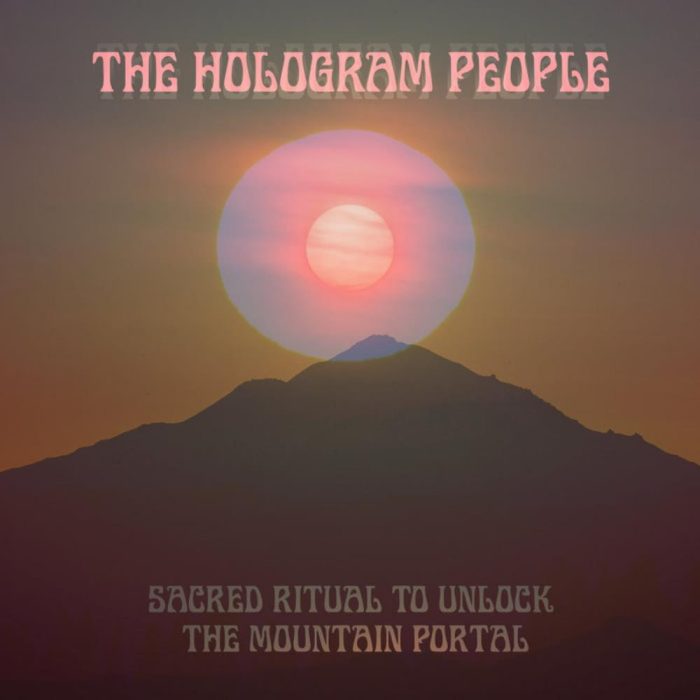
  • Sacred Ritual To Unlock The Mountain Portal
    The Hologram People • Sacred Ritual To Unlock The Mountain Portal
  • A Force at Play
    Cloakroom • Dissolution Wave
  • Slow Shines
    Living Hour • Softer Faces
  • The Straight Line is Dead
    Von Lehbauer • Single
  • Everything is Simple
    Widowspeak • The Jacket
  • Cults
    Florida BC • Salt Breaker Sand
  • Due to Advances in Modern Tourism
    Peel Dream Magazine • Modern Meta Physic
  • Love is In the Air
    Nobaby • Single
  • Sabre
    Monochromatic Visions • Reform
  • Magic Pig
    Tonstartssbandht • Petunia
  • Sunrise
    The Radiation Flowers • Summer Loop

The Hologram People – Sacred Ritual to Unlock the Mountain Portal

A satisfying slab of instrumental psychedelia and earthy kosmische from the UK. Acoustic guitars add bright textures, while walls of fuzz and cosmic synths aim to pierce the veil between this world and the great beyond. “Planet Sahara” makes the Sabbath influence explicit, although The Hologram People are less spooky, the buoyant grooves of tracks like “Pray to the Maypole Witch” and “A Seventies Void” indebted as much to Air’s hazy nostalgia and the prog-inflected library music of the Space Oddities series as to any lords or darkness.

Barring the extended ambient interlude of “Lord Shiva’s Mother Ship”, The Hologram People’s incantations are more concise than the mouthful of an album title would suggest. They may be opening the portal, but they aren’t leaving you adrift.

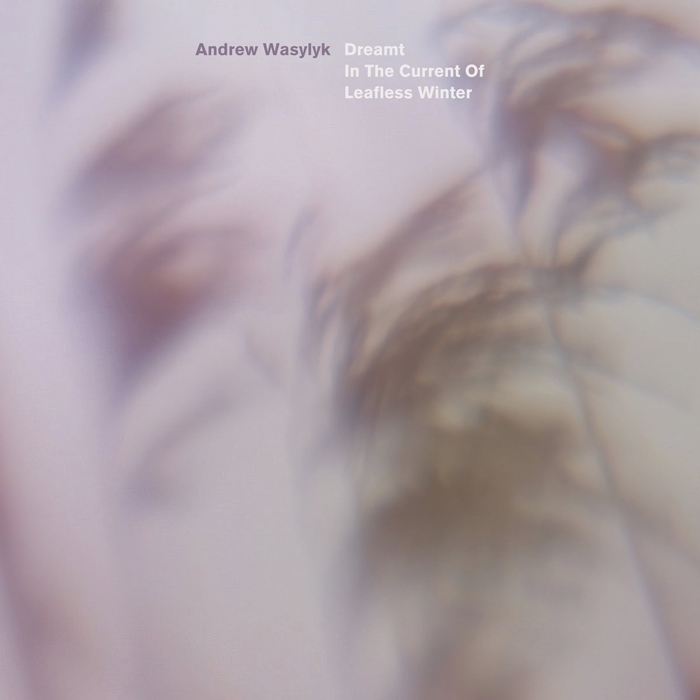
Andrew Wasylyk – Dreamt In The Current Of Leafless Winter

A gorgeous piece from Scottish musician Andrew Wasylyk, billed as “an attempted hypnagogic fog of meditation & possibility.” The 16-minute track builds slowly, a cloud of gentle twinklings and meandering melodies eventually coalescing into an insistent drum pulse, rising piano arpeggios, and inquisitive saxophone. The accompanying video, directed by Tommy Perman (of last year’s wonderful Positive Interactions project) ties the music to a multilayered, ever-shifting view of nature, echoing the song’s warmth in a bramble of soft light, tangled branches, and gently distorted reflections. The song and video both are bathed in twilight, comfortable, captivating, and kaleidoscopic.

10 Useful Distractions from 2021

I’ve been struggling to find something to say about 2021 to open this post. The first day of 2022 isn’t really a vantage point to have any perspective on the last year; it’s too close to a year that refused to take any sort of shape while I was in it, and still defies any easy summary. People have joked that we’re 600+ days into March, 2020, and they aren’t entirely wrong—in some ways, life has felt on hold since then. But if 2020 felt like a year derailed by an unexpected catastrophe, 2021 was something different, a year of moving goal posts, of finish lines receding ever further into the distance, or evaporating like a desert mirage.

It was a year that happened in fits and starts, with events either bleeding together or floating like bubbles, devoid of context and difficult to assemble into anything like a narrative. I know there was an Olympics. I’ve been vaccinated three times now, which in late 2020 looked like an end point, but now is clearly just a step along a much larger path. There have been stretches where socializing felt safe and almost normal, and others where navigating new understandings of etiquette strained friendships and put plans on indefinite hold.

All of that made 2021 a year in need of anchors, and that’s what this list was for me. The older I get, the harder it is to pretend my year-end lists are anything resembling authoritative or comprehensive, so I’ve stopped trying on that front. Instead, these are 10 things that grabbed my attention and held it in a year full of anxious distractions. Not all of them came out last year, but they were my escapes into fact, fiction, and fantasy, and I’d highly recommend them if you’re looking for the same.

  1. Babel – Meghan O’Gieblyn (2021, essay)An article about AI-generated text that uses the eeriness of its subject as a jumping-off point for an exploration of consciousness, narrative, and communication. It’s an exceptional blend of the personal and the academic, finding ties between the questions posed by AI, its implications on the future of creativity, and our own relationship to the unconscious forces that shape our realities.
  2. Children of the Stones (1977, TV series)Probably inspired by my anticipation for Kier-La Janisse’s excellent, three-hour-plus history of folk horror, Woodlands Dark and Days Bewitched, I spent more than a few hours in 2021 exploring old BBC horror-ish programs. 1969’s The Owl Service gets talked about more, but Children of the Stones was a more accessible gateway for me, a series that’s obviously aimed at young teens but manages to combine a decent mystery with an interesting take on occultism and a rich layering of timelines and conspiracies. You have to be willing to deal with 1970s BBC production values, which is probably an acquired taste, but if you can get past that, the series has a lot to offer.
  3. Entangled Life – Merlin Sheldrake (2020, non-fiction book)“Nominative determinism” is the idea that people are drawn to careers that suit their name—that a Jeeves is more likely to be a butler than a mechanic, say. It’s not an idea worth putting too much stock in, but it’s still a joy that a book like this would be written by someone named Merlin Sheldrake.Entangled Life is an attempt to identify with fungi, to see the world through a kingdom of life that is closer to us than it is to plants, but alien in so many ways. Like Thomas Nagel asking What Is It Like to Be a Bat, Sheldrake tries to understand how fungi experience the world, reveling in its myriad forms, celebrating its complex relationship with plant and animal life, and marveling at its seeming spatial intelligence. The science is fascinating, and the world of metaphor that it opens up through outlining an utterly alien way of being is positively mind-expanding.
  4. Mega Bog – Life, And Another (2021, LP)Picking just one album to include here is a bit of a nightmare—I had a hard enough time narrowing it down to 100 for my annual year-in-review episodes—but something in Mega Bog’s off-kilter psych-folk has consistently kept it at the front of my mind whenever I think about my favourite albums of 2021. In a year where I was mostly drawn to the meditative comfort of ambient electronic music, Erin Birgy’s eclectic songwriting was a reminder that there’s still a lot of life left in guitar music. Melodic, accessible, inventive, and absorbing.
  5. Midnight Mass (2021, mini-series)I knew absolutely nothing about this series going into it, which might just be the best way to experience it, so feel free to skip to the next entry. With that out of the way: Mike Flanagan’s latest Netflix offering is a novel take on a well-tread horror genre (he also did The Haunting of Hill House, which was solid, and The Haunting of Bly Manor, which I haven’t seen). To me, a sign of a great story is when it lends itself to multiple interpretations, and Midnight Mass works as a story about our fear of mortality, a metaphor for addiction and over-consumption, a critique of self-serving religiosity, and a funny, bittersweet monster movie. And like the best horror stories, the monster is ultimately a secondary villain next to the flawed, self-deluding humans who are all too willing to ignore some major red flags in order to see what they want to see.The pacing is inconsistent and the characters speak in monologues that never quite feel natural, but I fell into its rhythms pretty quickly, and it’s definitely up there in the top few Netflix originals to date.
  6. Pig (2021, film)When I first heard the premise of Pig—Nic Cage as a truffle hunter tracking down the people who stole his pig—I expected something along the lines of Mandy. Instead of an over-the-top revenge story and a gonzo Cage performance, I got something much more subtle, and much more rewarding. It’s a story about loss, and about the sacrifices people make in the world, the ways we shave the edges off our dreams to get ahead, until we forget what they looked like in the first place. It’s about the emotional power of food to connect us with memories and feelings we’ve long forgotten. And between all of that, it is a revenge story, just one that defies expectation at every turn.For an odd double-feature, pair Pig with Swan Song, starring Udo Kier, another case of an actor best known for his offbeat presence working in a more subtle register. It’s another film where a formerly successful service industry professional who now lives a spartan life removed from any former community has to reconnect with the city and people that once helped define them, reflect on loss of a loved one that still dominates their life, grapple with the gap between the real connections they wanted to make through their work and the consumer relationship that ultimately defined it, and regain some element of who they used to be.
  7. Piranesi – Susanna Clarke (2020, fantasy novel)I can’t remember the last time I was so engrossed in a work of fiction. Clarke’s much-delayed second novel is very different stylistically from Jonathan Strange and Mr. Norrell; it’s a short novel with a small cast of characters written in a naive voice, and without the dense footnotes that fleshed out the world of her debut. Some of the themes are the same, especially around the lengths some people will go to re-enchant the world, and the dangers of playing with forces beyond your comprehension, let alone your control.As satisfying as the story is—and it’s really one of the best fantasy stories I’ve read in years—the joy of the book is in the narrator’s voice, the way he sees things. His world is full of omens and lessons, art to be interpreted and patterns to be understood. Even though you know that things are more complex and darker than he comprehends, it’s a pleasure to view his world through his eyes.
  8. Preternatural Investigations – Sharron Kraus (2020, podcast)Recorded and released in the first year of the pandemic, Kraus’ 12-part podcast series touches on a lot of themes that appear in the other items on this list. There are multiple references to folk horror and the darker side of fantasy. The concept of re-enchantment is at its core, looking for ways to reconcile the magic of places and music and stories and art within a rationalist worldview. It looks at how wonder and awe can be found in the world, and how different rituals and philosophical frameworks can help us access that framework. And it’s all backed by beautifully atmospheric music from Kraus, an understated score that consistently enhances the already thoughtful narration.
  9. Welcoming the Stranger as an Act of Delight – Jeremy Klaszus (2021, interview)The Sprawl is an independent news outlet in Calgary, AB that practices slow journalism—more thoughtful takes on issues and events that can sit outside the typical news cycle. As much as I appreciate their political coverage (especially with how hollowed out traditional news media has become here), my favourite pieces tend to be the ones that break from the news world entirely. This interview with religious scholar David Goa from their “Mighty Neighbourly” 20th edition exemplifies what the Sprawl does best, engaging in a thoughtful conversation about community and a broader examination of what it means to be a good neighbour, and why we should care.
  10. What the Walls Feel as They Stare at Rob Ford Sitting in His Office (2020, short animation)I watched a lot of animation in 2021, and I can say with confidence that it was one of the strongest years I’ve seen in terms of independent animation. Even within that context, though, there was one film that stopped me in my tracks every time I came across it: Guillaume Pelletier-Auger’s video for composer Frank Gorvat’s oddly-titled piece, What the Walls Feel as They Stare at Rob Ford Sitting in His Office.It’s almost a stereotype of experimental animation, with simple shapes moving around the screen to drifting contemporary chamber music. Lines of circles, draped like beads, moving in increasingly complex patterns, which those of you who are more versed in mathematics can read about in the director’s detailed making-of post. That reductive description doesn’t do justice to Pelletier-Auger’s achievement here, though. The balance of simple shapes and complex patterns makes for one of the year’s most immersive film experiences, a ten-minute meditation to get utterly lost in when the need arises.

Permanent Records of Impermanent States

I’ve done a lot of writing over the years, but very little blogging. The thing that makes blog posts interesting (to me) is when they’re closer to the original definition of essays—attempts at understanding, rather than fully formed opinions. I like reading people collecting their thoughts, trying on perspectives, and tracing connections that haven’t fully revealed themselves.

I like reading those, at least. But writing them in even a semi-public forum is a lot more frightening. Despite being built around hyperlinks, which should be one of the best tools imaginable for creating context, the internet has somehow evolved in a way where every piece of content on it exists as an island. Every post, every tweet, every statement is seen as complete in itself, existing outside of time and outside of uncertainty—or at least has the potential to be seen that way by anyone who finds one of the ideas in it troubling. It makes it harder to be wrong, and being willing to be wrong is at the heart of any process that moves towards understanding.

This post is essentially a disclaimer, then. It’s me giving myself permission to try out this format of writing, because I can point to this post later on to say that I didn’t necessarily believe everything I wrote even when I wrote it, and I’m certainly not expecting myself to continue believing any of it for long stretches of time. Blog posts are permanent records of impermanent states. Just like a photograph can’t be expected to contain the whole truth of who a person was, is, and will be, a single piece of writing can’t either. Because there isn’t a singular, whole truth of a person. We are processes, physically and mentally adapting to the world around us, building models to understand and navigate it, discarding the parts that don’t work (if we’re lucky), refining the ones that do, and on rare occasions getting a glimpse of just how completely wrong we are.

I recognize that I’ve missed the peak of blogging by quite a few years at this point, but the other formats I’ve been dabbling in, like social media, Substack, freelance writing, all of them feel too public on the one hand—they’re aimed at audiences—and too insular on the other—each post goes out there and then disappears. When I look at people who’ve been running blogs for years or decades, it’s fascinating to me how they can look up what they were thinking one, five, 10, even 20 years earlier. Journalling opens up some of that possibility, but it’s physical, which makes it much more difficult to dig up old entries, and it doesn’t lend itself to tagging, linking, or quotation in the same way. Something is telling me that I want to try this format out, and so I aim to give it a try.

No mission statement, no public promotion, not yet at least. Just an attempt to compile and collate, find interesting connections that could maybe become more coherent writings. Initial thoughts, early attempts, in the hopes of strengthening those mental muscles that’ve atrophied over the years and to try to put a little more thought into how I engage with and respond to the world.

20 favourites from Instapaper

Not all of these articles are from 2021. I’m not even sure if the majority of them are. But, looking back on the last year, these are the articles I read that made the biggest impression on me, whether it’s for the quality of the writing, the ideas they inspired, their timeliness or other, unexpected twists and turns. Looking back on my last year of reading, it isn’t as diverse as I’d though. Most of the sources I’m reading are still pretty mainstream, and most of the topics are far from esoteric. Climate and COVID, politics and polarization; a little more on the nature of self or on the end of the world, a few more entries from blogs and substacks, but pretty overwhelmingly Western, white, and male, and pretty overwhelmingly sourced from a handful of major publications. That’s a habit I’d like to break out of in the new year; we’ll see how that goes.

Instapaper TitleLinkKeywords
A sci-fi writer got meta about gender. The internet responded by ruining her life.https://www.vox.com/the-highlight/22543858/isabel-fall-attack-helicoptergender, sci-fi, literature, social media
Babelhttps://www.nplusonemag.com/issue-40/essays/babel-4/language, technology
Beauty Will Save the World | Reality Sandwichhttps://realitysandwich.com/beauty-will-save-the-world/art, philosophy
Dada on Trial | Colby Chamberlainhttp://cabinetmagazine.org/issues/45/chamberlain.phphistory, art, philosophy, politics
Darwin Among the Machines — [To the Editor of the Press, Christchurch, New Zealand, 13 June, 1863.] | NZETChttp://nzetc.victoria.ac.nz/tm/scholarly/tei-ButFir-t1-g1-t1-g1-t4-body.htmltechnology, history
Everyone Is Beautiful and No One Is Horny – Blood Knifehttps://bloodknife.com/everyone-beautiful-no-one-horny/pop culture, psychology
Fungi’s Lessons for Adapting to Life on a Damaged Planethttps://lithub.com/fungis-lessons-for-adapting-to-life-on-a-damaged-planet/nature, climate
Horsehistory study and the automated discovery of new areas of thoughthttps://interconnected.org/home/2021/06/16/horsehistorylanguage, philosophy
I Miss It Allhttps://longreads.com/2021/07/22/i-miss-it-all-devin-kelly/covid, relationships
I Want My Mutually Assured Destructionhttps://www.theatlantic.com/ideas/archive/2021/05/my-mtv-cold-war-retrospective/618812/apocalypse
Love the art, hate the artist? How a popular Chicago college class
is reexamining Kanye West, Michael Jackson, Picasso and others in the
era of cancel culture
https://www.chicagotribune.com/entertainment/ct-ent-saic-cancel-culture-class-20210505-p5cttxjf4vcsbgla3stp5zkoxy-story.htmlart, pop culture, cancel culture
Meditations On Molochhttps://slatestarcodex.com/2014/07/30/meditations-on-moloch/culture, philosophy, society
Opinion | The Road to Oceania (Published 2003)https://www.nytimes.com/2003/06/25/opinion/the-road-to-oceania.htmlpolitics, literature, sci-fi
The Cold War Over Hacking McDonald’s Ice Cream Machineshttps://www.wired.com/story/they-hacked-mcdonalds-ice-cream-makers-started-cold-war/business, technology
The destructive conspiracy theory that Victoria unleashed upon the worldhttps://capnews.ca/news/satanic-ritual-abuse-michelle-remembers-lawrence-pazder-victoriaconspiracy theories, urban legends
The Math of the Amazing Sandpile – Issue 107: The Edge – Nautilushttp://nautil.us/issue/107/the-edge/the-math-of-the-amazing-sandpilemath, sceince
The Methods of Moral Panic Journalismhttps://michaelhobbes.substack.com/p/moral-panic-journalismjournalism, urban legends, groupthink, cancel culture
The Truth, by Stanisław Lemhttps://thereader.mitpress.mit.edu/the-truth-by-stanislaw-lem/short fiction, sci-fi, weird fiction
Urban Fish Ponds: Low-tech Sewage Treatment for Towns and Citieshttps://solar.lowtechmagazine.com/2021/03/urban-fish-ponds-low-tech-sewage-treatment-for-towns-and-cities.htmlclimate, urban planning, degrowth
Welcoming the Stranger as an Act of Delighthttps://www.sprawlcalgary.com/welcoming-the-stranger-david-goacommunity, philosophy, politics

Einstein’s Monsters

A few weeks back, I finally read the opening essay in Martin Amis’ Einstein’s Monsters, a book I’ve had on my shelf for years but never quite got around to. Reading about how nuclear anxiety felt during the cold war, it’s hard not to compare it to climate anxiety, different as they are in some respects.

Amis makes a point about the strange effect nuclear weapons have on the experience of time, erasing the future and past, leaving only an anxious present. If that feeling ever went away, I think it’s come back in recent years, although with less of the sense that the world only exists because of the happy accident that there hasn’t been an unhappy accident.

(On that note, the fact we’re alive at all after nearly a century of the bomb seems like a strong argument for the multiverse view where consciousness and experience compress into the threads of reality where life continues. At the very least, it reinforces the incredible fact that I’m only here now because this is a reality where humanity hasn’t yet ended itself, which is an unlikely but necessary plot contrivance.)

The similarities are in the sense of futility and anger, the strange knowledge that all of this can end, the frustration at how politics and institutions can pervert language to discuss “acceptable” losses, their seemingly inhuman acceptance of apocalypse for the sake of a system. The chief difference being scales of time. The nuclear balance required (and still requires) an eternity of days where no one triggered the end. A statistical impossibility, given enough time. An eternity of getting it right to avoid an instant of getting it wrong, followed by an eternity of nothing.

Climate change compresses time in a different way. The effects of action and inaction are remote. You can argue the effects of inaction are immediate because they’re here now, but those aren’t the effects of today’s inaction, they’re the cost of decades passed without concern for today. We’re dealing with the hangover of a night out 30 years ago, and we’ll go out drinking again tonight because staying sober won’t prevent tomorrow’s pain. The relationship between yesterday and today and tomorrow are somehow beyond our grasp.

But the biggest similarity is in how we are seemingly powerless in the face of systems we created, and which we continue to perpetuate. To get at the absurdity of humans using the threat of nuclear weapons as a source of security, Amis uses the metaphor of a children’s party guarded by thousand-foot sentinels covered in poison and razor blades, so obviously monstrous and beyond any scale the children can control–although it’s within the children’s power to ask them to leave. At least for climate change, there is some obvious benefit to sustaining our problematic behaviour, short-sighted as it may be. Instead of the sentinels, it’s more like we’re running a gas generator in the house, and it’s slowly filling the rooms with carbon monoxide. The house is big, so we can believe the fumes won’t get to us in our lifetime. And if we turn it off, we’ll get colder; we won’t have light to read by; our experience will be harder and poorer. So we let it run a little longer, and then longer still.

Stranger Than We Can Imagine

I wanted to make some notes to myself on John Higgs’ Stranger Than We Can Imagine. I’ve gotten pretty used to using my Kindle to highlight the important bits of what I’ve been reading, so having to return a physical book to a library feels like more of a loss these days, and I want to at least capture the arc of its argument for myself.

Going mostly from memory, with chapter titles as prompts:

  1. Relativity: Deleting the omphalos
    The “omphalos” is a pillar or anchor for a culture, something so central that it works as a reference point for everything else. Relativity established that in physics, there is no such thing as an objective frame of reference, location, movement, etc, can all be defined only in reference to arbitrary points. This is a major blow to the idea of an objective, understandable universe, as in a very real way, nothing can be described purely objectively.
  2. Modernism: The shock of the new
    At the same time that physics is erasing the omphalos of objectivity, Modernism in art is tackling something similar. Cubism is erasing the objectivity of the author by compressing multiple perspectives onto a single canvas. Duchamp (or probably Baroness Elsa von Freytag-Loringhoven) are provoking fights over whether anything can objectively be called art. Joyce and Eliot are creating literature that embodies multiple perspectives in single works, in multifaceted, unpredictable ways. As with physics, the single, fixed perspective is seen as inadequate to describe/portray reality.
  3. War: Hoist that rag
    The horrors of the first world war shatter the illusion that the leadership of empires know what they’re doing. While democratization was already in process and would still proceed in fits and starts, this is a death knell for the idea of monarchy (a single, hereditary line of leadership) as omphalos, as well as illustrating the danger of nationalism subsuming individual identities.
  4. Individualism: Do what thou wilt
    With so many anchor points already removed, what’s left? Individualism. Like Descartes arriving at the self as the only objective truth, figures like Ayn Rand and Alistair Crowley preach the gospel of individualism. In that world view, culture has no fixed truth, just the interests of every person as a world unto themselves.
  5. The Id: Under the paving stones, the beach
    But even the foundation of individualism is flawed, as psychoanalysis shows that we don’t even know ourselves. We are dominated by impulses that are necessarily invisible to us, and that don’t obey the laws of civilization. Surrealists tried to tap into this for artistic purposes, despots manipulated society’s id into acts of genocide; without the omphalos of older times to act as ego, the id runs unchecked.
  6. Uncertainty: We search for new omphalos, but in vain. In math, it’s proven that no system of logic can be complete, provable, and internally consistent. In physics, there are limits to what we can know built into the structure of reality. There is randomness inherent in the universe. Complete, objective knowledge is fundamentally impossible.
  7. Science Fiction: A long time ago in a galaxy far, far away
    I think the argument here was that sci-fi is a reflection of a society’s aspirations, and the sci-fi of the 20th century was obsessed with individualism, and especially Campbelll’s monomyth: a special, chosen figure on a hero’s journey. The cultural dominance of Star Wsrs shows the resonance of this idea. On the other hand, by the early 20th century, different visions of storytelling, more reflective of multiple perspectives, are rising, and maybe a sign that individualism’s rule is waning.
  8. Nihilism: I stick my neck out for nobody
    The quote is from Casablanca, seen as a metaphor for America in WWII, going from self-interested isolationism to the realization that there are things worth fighting for. The chapter is more on existentialism than nihilism, but in any case, a reaction to the idea that everything is meaningless. Not by denying it, but by embracing the freedom to make our own meanings, to revel in the absurdity of it all.
  9. Space: We came in peace for all mankind
    A conflicted portrait of the space race, and the figures involved, like von Braun and his willingness to commit atrocities if it meant advancing a rocket program, or the Crowley-aligned fanaticism of Jack Parsons, not to mention the government’s portrayal of the space race as a humanitarian cause despite its obvious military motivations. But: the view from space also helped erase some individualist ideas by showing the connectedness and frailty of our planet. “In the twentieth century mankind went to the moon and in doing so they discovered the earth.”
  10. Sex: Nineteen sixty-three (which was rather late for me)
    This is the point where I really started to lose the thread of the book as a single narrative of the 20th century and not just a list of interesting things that happened. It talks about birth control, sexuality in literature, feminism, the acceptance of sex as a part of life, the objectification that was still rampant in a lot of so-called progressive movements… too many themes for me to reduce to a single through-line.
  11. Teenagers: Wop-bom-a-loo-mop-a-lomp-bom-bom
    Mostly on rock ‘n’ roll and the hedonism it inspired, the Keith Richards quote “we had to do what we wanted to do”. An interesting insight on how “the day the music died” cleared the way for a new generation to move the music forward without the baggage of elder statesmen. The main idea seems to be on how the teenage stage involves an embrae of individualism to an extent that can seem unhealthy, but is necessary to become a functioning adult, part of an argument that the 20th century may represent just such a teenage period for humanity.
  12. Chaos: A butterfly flaps its wings in Tokyo
    Chaos theory is discovered, showing that small discrepancies lead to massive changes. Fractals are discovered, showing that infinite complexity can exist within simple formulas. Strange attractors mean that systems gravitate towards certain stable states, but what can make them flip is unpredictable. The question emerges: if all that is true, then why does order dominate? Why does the environment seem to self-regulate? The Gaia hypothesis emerges, seeing the world a s a single entity, not conscious, but able through its many complex systems to sustain itself. A view of the earth that’s also reflected in the complex, conflicting beliefs of modern paganism, and that runs counter to the omphalos of Christianity.
  13. Growth: Today’s investor does not profit from yesterday’s growth
    A whole lot going on in this chapter. The ideal of unfettered economic growth and its consequences for the environment. Corporations as exempt from the cycle of life and death that is supposed to keep a check on unfettered growth, something more like a cancer. The belief that, for the sake of economic growth, everything must be owned, including rainwater in Bolivia. Neoliberalism and its ties to excessive individualism of the Randian sort. “Ideology beat science. Individualism beat environmentalism.”
  14. Postmodernism: I happen to have Mr. McLuhan right here
    The ultimate relativity of everything, after all omphalos have been destroyed. But the chapter also has a pretty cynical view of postmodernism, citing the Sokal hoax as essentially an excuse for everyone to admit that, even if it has a core of truth, most of post-modernism is gibberish. The worry is that in throwing out postmodernism, we lose the insights that led to it; it’s an attempt to grapple with the relativity of everything that was demonstrated in science, art, and culture.
  15. Network: A planet of individuals
    If the 20th century was our teenage period, or a period of deconstruction from our previous (false) omphalos, with an overadjustment into id and individualism, what comes next? The power of the network. Everything is still fragmented and individual, but the network provides context. There’s a poorly defined but promising sort of collectivity involved. “The network is a beheaded deity. It is a communion. There is no need for an omphalos any more. Hold tight.”

Given that it was published in 2016, I wonder if Higgs’ optimism about the network still holds. Enthusiasm for the utopian internet was already waning by that point, but it’s almost nonexistent in 2021.

Still, I like the main thrust of the book, the 20th century as a period of decentering, and finding out what happens when what we thought was core to our society is no longer generally accepted. The teenage century seems like a pretty accurate description, and while a lot of traits established in teenagerhood do tend to live on in the adult, they’re hopefully moderated and channeled in productive ways. It’s a way to look at that century more optimistically, even if there’s a strong risk we won’t outgrow it before it’s too late.

I am not what I appear to be

Here’s how New Scientist’s article on the COP26 summit opens:

The man charged with leading a successful climate change summit in five weeks’ time insists he is no environmentalist – but is now convinced of the urgency of tackling global warming.

“I’m a normal person, right, I’m not someone who’s some great climate warrior coming into this,” says Alok Sharma, the president of the COP26 meeting, who took up the job in February 2020. “But it has given me a real appreciation and understanding of why it is so vital that we get this right.”

And here’s how the same article quotes Boris Johnson, trying to give his views on the climate crisis a friendlier spin:

“I am not one of those environmentalists who takes a moral pleasure in excoriating humanity for its excess”

I’m sure both of them are telling the truth, that neither considers themselves to be an environmentalist, despite agreeing that climate collapse is a serious, existential crisis that demands action at the highest levels. And making that clear in their public statements is a way of appealing to those who are still skeptical, or too politically partisan to accept that message from people who are sufficiently unlike them to easily write off their views.

But like the people who run for office while insisting they aren’t politicians, there’s something obviously incongruent in someone advocating for the seriousness of climate change while loudly denying that they are an environmentalist. In the same breath, they’re agreeing with the environmental movement’s assessment of reality, while holding onto the idea that the people who arrived at that assessment are kooks, extremists, abnormal people who are best kept at a distance. “They may be right,” this line of thinking goes, “but they’re still nags, scolds, interested only in propping up their own egos by making you feel bad.”

There’s a lot of judgment in those statements, especially in Johnson’s imagined moral sadist, getting off on their sense of superiority. An armchair analysis would lead me to guess previous environmental criticism made him feel guilty, and his response was to assume the intent was to hurt him, personally–because we have a human tendency to assume things are personal, and to assume the worst of those who hurt us. Even if that’s off the mark, the statement itself still shows an imagined category of person, the environmentalist who has chosen the cause because they enjoy making other people feel bad, and Johnson’s need to refute that self-created label.

Ultimately that’s what I think those statements and all the ones like it are about: a need to escape the labels we put on others. In order to understand the world, we need to categorize it, and our understanding of other people is no exception. It is impossible for us to understand the full complexity of even a single other individual, let alone the hundreds or thousands of people we interact with on a regular basis. If we needed to face the entirety of another person every time we dealt with them, we would simply freeze, so instead we create categories: environmentalists are like this, politicians are like that, feminists are like this, and so on. There may be part of us that recognizes these types are constructions and that no one in each group will exactly fit our stereotype, but we still assume it’s true in aggregate: no environmentalist is exactly like x, but collectively they probably come pretty close.

To whatever extent we need to generalize with others, though, we absolutely abhor being the subject of generalizations. So when we find that we’re saying something or taking some action that would peg us as a member of a particular group, we’ll take pains to explain we aren’t actually one of them, despite the superficial similarities. That Platonic ideal we hold of all the categories we create is too simple and too other to capture the complexity that is our own self, and so we instinctively bristle at the thought of being labelled. We are too vast and complex and contradictory to fall under any label, especially ones we’ve already used to write off the views of others, since those labels tend to be the most overly simplistic anyway.

The impulse to refuse the categories we’ve created should act as a reminder that those categories are inherently incomplete. Not false, necessarily, but simplified and abstracted for the purpose of helping us navigate the world. We can’t actually hold the complexity of others in our own heads, but we can recognize that labels sit just as uncomfortably on them as they do on us. If you’re running for office but refuse to call yourself a politician because the term doesn’t reflect your own view of your motivations and experience, recognize that your opponent likely feels the same. If you are trying to agree with a group while pushing against being identified as one of them, try to understand why it’s so important for you to avoid the label, and what assumptions that implies.

If you’re too special to be confined to a category, so is everyone you’ve categorized.
Change is possible because it is necessary

Two quotes from Tyson Yunkaporta’s Sand Talk that have been running through my mind today.
The second one is an especially heavy one, a reminder that not seeing the harm caused by our lifestyle doesn’t mean there is none. In the same way that most of us don’t blink at the thought of eating meat but blanch at the thought of even the most humane farming practices, let alone the reality of how most animals are actually treated, we’ve exported and outsourced the extractive practices, abhorrent working conditions, wars, dictatorships, and other forms of violence that are required for even the more moderate and thoughtful western lifestyle.

The first one is trickier. Has every civilization failed? Some certainly have, and others have lasted by transforming into something unrecognizable from how they started, which could be seen as success or failure depending on your perspective. And some are still going, waxing and waning and adapting and clinging to power. So you could nitpick the claim. But “Change is possible because it is necessary” — that’s a good one. That’s something to hold onto.