Recent Reading: Q1 2024

(also including a bit of April)

The Handover

David Runciman

tags: non-fiction, AI, politics, capitalism

Having listened to many hours of Runciman’s podcasts, it’s always a treat seeing how well his voice translates into his writing—approachable, inquisitive, and authoritative in equal parts. The conception of states and corporations as artificial agents is an interesting thread he’s been pursuing since at least How Democracy Ends, and is a helpful framing for thinking about how much agency we’ve already handed off to non-human entities, even before bringing AI into the mix. It’s always good to remember that there’s a big difference between “novel” and “unprecedented,” and there’s almost always a historical context worth learning from.

The Wendigo

Algernon Blackwood

tags: novella, weird fiction, weird nature, feet of fire

Not as atmospheric or as haunting as The Willows (a story where not much happens, but it happens vividly), but memorable in its own right, especially if you can set aside the of-its-time racism that crops up a couple of times in the opening chapter. Mostly, it’s Défago’s oddly poetic cries that will stick with me, the rest of the story being fairly boilerplate weird fiction—or at least what would become boilerplate in the decades to come. Still, one phrase sticking with me is really all I ask for from something this short.

Mind MGMT Vol 1 – 6

Matt Kindt

tags: graphic novel, conspiracy culture, psychic warfare, immortals, dolphins

I very much appreciated the density of this series and the effort of the watercoloured artwork, although I worry a bit when density and effort are the first things I think to compliment. Kindt presents an absurdly intricate world with its own intuitive (or at least intuitable) logic, and while it sometimes can seem too multilayered for its own good, it generally manages to keep the story as the central focus.
Never quite attains the mystic highs of something like Grant Morrison’s Invisibles—despite its focus on altering minds, I wouldn’t quite call this psychedelic—but there’s a unique world, unique art, interesting use of the medium, and a story that doesn’t strain to fill a half-dozen trades. It more than justifies a read, in other words.

A Guest in the House

Emily Carroll

tags: graphic novel, haunted, phantasmagoria, trauma

Fantastic. Atmospheric and unpredictable, beautifully blending the mundane and the phantasmagorical. Carroll’s artwork is exquisite, overtly on the pages where fantasy takes over, and more subtly in the dollops of colour that leak into the real world, especially when thinking of those in light of the ending. I love how unconstrained she is by panels or rigid structures; the story art seems so much more organic when it’s allowed however much room it needs.

Not a traditional haunted house story and that’s absolutely for the best. I never settled into a sense of knowing just what kind of story this was, and on the rare moments I did, whatever expectations I did have were nicely subverted. It’s unusual for an ending to reframe so much of what came before, with nothing contrived or forced about it. That’ll sit with me, for sure.

When reading something like this, I’m often struck by the difference in how much time it takes to create a page vs how long it takes to read it. Probably a good reason to revisit this sooner than later, just to see what details I didn’t pick up on the first time

Through the Woods

Emily Carroll

tags: graphic fiction, short stories, fairy tales, weird fiction

I definitely see the appeal of this one—Victorian/Edwardian* ghost stories with a more contemporary, weird edge—and if I hadn’t started with A Guest in the House I probably would be giving this more praise. But Carroll’s newer work is just so much more sophisticated, in its artwork and in its narrative, that I couldn’t help being a little disappointed with this. More a testament to her growth as an artist than a criticism of this one, which is still worth a read, just not one I’d likely go out of my way to recommend.

*I shouldn’t guess at eras, it’s really not something I know much about. Let’s just call it an era with both untamed wilderness and frilly garments.

Fluke: Chance, Chaos, and Why Everything We Do Matters

Brian Klass

tags: non-fiction, coincidence, interconnection, fate, free will

One of the risks of reading a pop-sci take on a subject you’ve spent a lot of time reading and thinking in is it can feel like a bit of a rehash or a gloss, and that’s how I felt for a lot of Fluke. It’s not a criticism of the book, which is thoughtful and features well-chosen examples for its look at the highly contingent nature of reality. Anything that tries to pull together threads of chaos theory, the interconnection of all things, and the impossibility of free will is admirable. I think this’d likely be a great primer for people new to these subjects and might open doorways into areas like Zen Buddhism, optimistic nihilism, and contemporary philosophy. It just wasn’t the right book at the right time for me.

The Weather Detective

Peter Wohlleben

tags: non-fiction, gardening, weather, flora, fauna

I’m not sure if this is on me or the book’s marketing, but I really didn’t expect this to be so much about gardening. The Hidden Life of Trees was wonderful and felt like it was exposing me to a whole world that had previously been invisible to me. This had some interesting tidbits, but felt closer to an advise column than a revelation. Still very approachable and knowledgable, but not something I likely would have sought out if I’d known what it was.

The Middle Passage

James Hollis

tags: non-fiction, mid-life, Jung, purpose, rebirth

I really need to put together some more thorough notes on this one, but in short, a lot of this resonated with what I’ve been feeling as I fumble into my 40s. A helpful framework for thinking about how to push through and emerge, if not stronger, at least more fully myself. The handful of exercises it offers are more about asking the right questions rather than providing concrete actions to take, but part of the whole point is that there are no easy answers, and I can see how looking for an outside authority to show you your true inner self would be counterproductive.

The Resurrectionist : The Lost Work of Dr. Spencer Black

E.B. Hudspeth

tags: fiction, fake biography, illustrated, novella

An odd work—essentially a short story disguised as a biography, paired with anatomical drawings of mythical creatures, which take on a darker tone when paired with the story. It’s a unique book, and the closing image of the story is ominous and ambiguous. There isn’t much in the way of narrative, and what there is, at least the more horrific aspect, is mostly implied. But it gives just enough to make sure it lingers.
Non-Fiction: David Runciman’s The Handover

Having listened to many hours of Runciman’s podcasts (formerly Talking Politics, now the also-excellent Past, Present, Future), it’s always a treat seeing how well his voice translates into his writing. He’s approachable, inquisitive, and authoritative in equal parts, all of which makes it much easier to follow him along his more tenuous tangents.

The Handover is a more thorough exploration of a thread he’s been pursuing since at least How Democracy Ends, namely the conception of states and corporations as “artificial agents,” essentially the decision-making equivalents of “artificial intelligence.” It’s a helpful framing for understanding just how much agency we’ve already handed off to non-human entities, and why it seemed like a good idea to essentially farm out many of our key responsibilities to institutions with no intelligence and no humanity. The issue, then, is whether AI will be a tool for humans, or a partner for our artificial agents that ultimately aligns against us—not in a paperclip machine sort of way or anything quite so dramatic, just in a way that further alienates human interests from how the world runs.

The most useful thing about the “artificial agent” framing is the reminder that there’s a big difference between “novel” and “unprecedented.” AI is new, but we’ve been handing off responsibility to “machines” for centuries, and Runciman reminds us that there’s always a historical context worth learning from.

“It became clear pretty quickly that it wasn’t necessarily silence that people were looking for, it was a pleasant sound, whatever that means exactly.”

From Noema Magazine, a look at ways of cutting down on noise pollution in cities. I live in a neighbourhood where the trains are so loud at night that I can’t sleep without a white noise machine—this isn’t the pleasant chug-chug of trains passing by, it’s the screeching brakes and slamming cars of a rail yard—and have become much more conscious of noise pollution in recent years.

Two examples that really stood out: Germany (and other parts of Europe) use a “quiet asphalt” that has more empty spaces in it, which reduces friction and noise from high-speed traffic. This asphalt is more expensive to maintain, but they’ve made the decision to prioritize a more liveable urban environment, so they extra cost is worth it. And similarly, at least some subways and trains in Japan use rubber wheels instead of steel—again, it costs more to maintain, but they feel it’s worth the cost.

I also appreciated that the article goes beyond talking about just reducing noise to talk about good sound. Silence isn’t the goal, it’s a space that feels alive and welcoming, but that also allows for human interaction and contemplation. Bird sounds, outside conversations that are loud enough to be aware of but quiet enough to remain in the background—once you remove the constant din of urban sounds, there’s room for a soundscape that’s lively and nourishing, instead of damaging.

Our urban environment is something we’ve built and it’s something we can improve. Efficiency has its benefits, but it’s also important to build a world where human comfort is at least a factor in what we’re building. As the article points out, noise pollution affects how we think, how we feel, and our actual physical health—not to mention its impact on the birds and other animals that can make a space feel so welcoming. It’s inspiring to see places where noise is more than just an afterthought.

Recent Reading: February 2023

The Fisherman

John Langan

tags: weird horror, weird fiction, fantasy worlds, dark magic

I’m not sure whether it’s a story with a long digression in the middle, or a story with a long framing device bookending it, but either way an odd construction—a tale split in the middle by another story as long as the rest combined. That middle story is the more vivid one to me, the characters more fleshed out, the setting more vivid, and that sort of works given that the middle story is meant to be almost an infection, capable of carrying additional details even if they aren’t told.

The outer story drapes itself in the weight of loss, and I don’t know that it quite carries it. Those human elements aren’t what has stuck with me, at least. Not in the same way as the more fairy tale-like middle story, which spans generations and continents. That one is a story of duelling dark magicians, more compelling but I guess less weird than a lonely fisherman stumbling onto the fringes of that story. So what this really is, is a weird story that manages to explain itself without losing its impact.

Hellboy Omnibus 1: Seed of Destruction

Mike Mignola

tags: graphic novels, weird fiction, tentacle monsters, frogs, rasputin

Such a perfect fusion of weird horror and pulp and comic book tropes, with some of the most striking art that comics have produced. I don’t know why I’ve only ever read bits and pieces of Hellboy, I’ve known for ages that I would love it when I got around to it. Maybe it’s that there’s so much of it out there, but right now that’s what makes it so delightful to start on it.

It was the documentary Mike Mignola: Drawing Monsters that pushed me into finally sitting down to read a Hellboy collection. I’m usually pretty leery of art documentaries, but Drawing Monsters was one of the best I’ve seen in a long while. Mignola himself seems down-to-earth and self-depricating, and generally aware of his flaws, and it’s nice to find someone who managed to build a career around doing what he loves and recognizes how fortunate that is. Plus, the directors seemed like nice folks when I interviewed them last year for the CUFF.Docs documentary film fest.

What We See When We Read

Peter Mendelsund

tags: meta-analysis, phenomenology, design, essay, visual essay

This visual essay is based on a premise that doesn’t really hold true for me, in that I have never really felt that I “see” when I read. So when Mendelsund tries to convince me that “seeing” is a false impression that’s disconnected from the actual experience, I’m already there. If there’s a revelation to be had from that, it’s just that I thought other people with a stronger visual sense would have a different experience. Maybe not.

Outside of that, I definitely enjoyed Mendelsund’s flair for visual metaphor, and the book’s questioning of the experience of reading. It’s kind of amazing how much The Master and HIs Emissary is impacting everything else I read that comments on perception and phenomenology and philosophy of mind. Here, Mendelsund describes what we “see” of the characters and settings we read about as fragmented, detailed in parts but not additive—more details don’t create a more vivid image, even if they do create a more rounded understanding.

I kept thinking of the left-brained mode of perceiving, the one that dissects and strips of context, that knows the parts that make up a whole but can’t seem to understand how to put them together. Mendelsund isn’t using that framework, but everything he says fits the idea that literature and language more generally is the domain of the dissecting left brain.

The Ladies of Grace Adieu and Other Stories

Susanna Clarke

tags: short stories, fairy tales, fantasy, magic, fairies

It doesn’t have the scope of Jonathan Strange & Mr. Norrell, and it doesn’t suggest the same depths as Piranesi* but Clarke is a delightful writer and these stories nicely flesh out her conception of fairies as a strange mix of sophisticated and feral. Decadent is probably the word for it—the characters, not the stories, which are modest enough and all have the feel, appropriately, of fairy tales for adults.

Charming as most of the stories are, the real treat was the brief return of Jonathan Strange. Funny how satisfying it can be to revisit a character in a more relaxed setting.

*Not exactly fair to compare, given that Piranesi is quite possibly my favourite piece of fiction in the last decade or so, just an absolutely magical work in every sense of the word.

Chokepoint Capitalism

Rebecca Giblin and Cory Doctorow

tags: non-fiction, capitalism, monopolies, monopsonies, intellectual property, collectivism

Plenty of good anecdotes on the way companies use their position as dominent buyers or sellers to manipulate markets, pocket unfair shares of wealth, and generally make life worse for everyone who isn’t their execs and shareholders. The collective solutions proposed all seem like reasonable starting points, too—but while I agree with their point that systemic problems require systemic solutions, I don’t feel like I left the book with a starting point of how to work towards that change.

Maybe just naming the problem and talking about it is a sound enough starting point. Chokepoint Capitalism is a useful term, evocative and intuitive to understand, but also expansive enough to capture a whole world of corporate corruption. If it bleeds its way into more general discourse, that can only be a good thing.

Recent Reading: January 2023

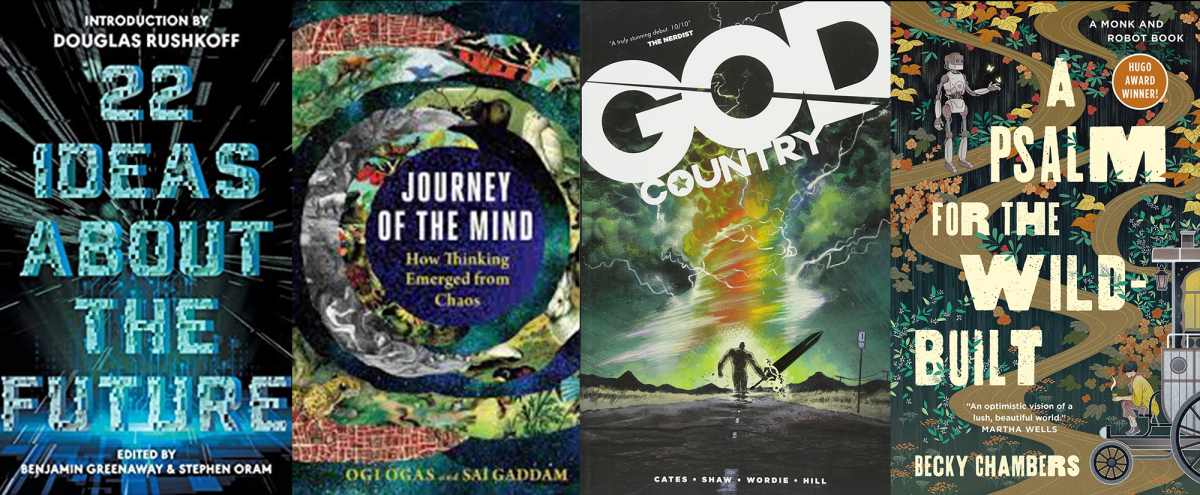
22 Ideas About the Future

Benjamen Greenaway (Editor)

A collection of short sci-fi exploring the present through elabourations of technological trends, plus essays picking at the threads the authors have raised. The ideas are more interesting than the prose, which can come across a bit amateurish—but then these are meant to be bite-sized provocations more than complete stories, so it’s hard to complain on that front. The bulk of the stories are dystopian, extrapolating the worst tendencies of our modern systems into bleak Black Mirror vignettes, but I was pleasantly surprised to see a mix of hopeful stories in with the cautionary tales, along with some that are a mix of both. Tech is rarely just one or the other, and these brief glimpses into possible futures are a great way of illustrating that mixed potential.

Journey of the Mind: How Thinking Emerged from Chaos

Ogi Ogas and Sai Gaddam

An interesting book that doesn’t quite achieve what it promises (the humble task of resolving the age-old question of what consciousnes is and how it emerges from unconscious matter). The authors seem convinced that it does, and maybe something is lost in the translation from math-heavy research papers to accessible prose, but I don’t think I’m any closer to grasping it.

The key chapter on self makes a distinction between consciousness and self-awareness that I’m having a particularly hard time with, essentially saying that many creatures have qualia experiences of the world, but only humans are aware of themselves having them (unless they’re actively engaged in something like the mirror test, at which point a self-aware self emerges only to disappear once the mirror is removed). And I just can’t grok the concept of consciousness without awareness.

The idea of consciousness as a process, like a basketball game or hurricane, seems accurate but not exactly groundbreaking, and also an oversimplification. After all, a game is only a game because of the conscious actors playing it, and a hurricane is a dramatic example but that comparison relies on the drama of the image; a waterfall is a similarly context-dependent arrangement of water, but you’d be hard-pressed to convince me that saying “”consciousness is like a waterfall”” would tell me anything useful. Game, hurricane, and waterfall are all categories that emerge out of conscious beings assigning names and categories to physical processes; it’s hard to see how they can be used to explain the emergence of consciousness itself.

I did find it was wonderfully written, and its descriptions of mental processes were clear and informative. I don’t feel much closer to understanding the mystery of the self, but there’s plenty to chew on regardless (as evidinced by the fact this summary is double the length of the other three combined).

God Country

Donny Cates, Geoff Shaw, Jason Wordie

A neat pairing of Jack Kirby-style cosmic gods and rural family drama—a story about memory, loss, death, and chopping up space-demons with a sentient 12-foot sword. It’s pulp, but well-done pulp, with enough world-building to feel fleshed out but not so much that it’s bogged down in its own mythology.

Cates’ take on the cosmic realm is more coherent and grounded than Kirby, for better and worse—I’m a sucker for that Kirby krackle, and the incomprehensibility of his mythos was part of the charm. But God Country’s groundedness is a nice spin on the subject matter, and there’s no denying the book does everything it sets out to do.

A Psalm for the Wild-Built

Becky Chambers

If I were able to write fiction, I think this is the kind of fiction I’d like to write. The first book in the Monk & Robot series is gentle and thoughtful, but manages to pick at some anxieties I’ve been having for a long time, about purpose and direction and satisfaction. There’s not much in the way of conflict, but plenty in the way of insight, and it’s short enough that I basically inhaled it.

Even more than the characters, I want to spend more time with the book’s religious system, which is revealed in small details but still largely mysterious by the end of the book. The best fictional religions have a way of concisely showing what’s important in a given world—which I guess real religions do, too, but those are so much more multilayered and convoluted from centuries of revision and interpretation that it takes real scholarship to that heart. A religion in a fiction is more concentrated by necessity, but still abstracted enough to have that feeling of mystical importance, a distilled philosophy dressed in metaphor. I’m hoping Chambers delves into it more in the sequel.

Books I read in 2022

BookWyrm says I’ve read about 6,500 pages this year (which probably includes a bunch of appendices and end notes that I didn’t actually read, but I’ll still take it). I feel like a very slow reader compared to some of my more literary friends, so making it through 20 books (including a couple of novellas and essay collections) feels like an accomplishment. Especially considering all of the other books I’ve started and set aside, or skimmed with the intention of returning to, or am still chipping away at when the mood hits, of which there are probably at least another dozen. I’m a very inconsistent reader, is what I’m getting at.

Which means the books I actually finish tend to be ones I’m genuinely enjoying—and that makes ranking into a pretty arbitrary task. So instead, just assume that if the description seems like something you’d be interested in, it’s probably worth the time investment. Keeping in mind my reading tastes can tend towards the dry and semi-academic.

I still need to do a better job of diversifying my reading. Of the 19 authors below, nine are women or people of colour, which means more than half are neither of those. Something to work on in the new year (and most of the books on my immediate to-read list will help with that, at least).

Books I actually finished this year:

TitleAuthorAbout
Being PeaceThich Nhat HanhA guide to Buddhist thought, rooted in empathy and kindness.
Ducks: Two Years in the Oil SandsKate BeatonAn unflinching graphic novel documenting Beaton’s time working in the oil sands—darker and heavier than I was expecting from Beaton, but the subject matter merits it.
In Praise of PathsTorbjørn EkelundMore a memoir than the book on walking that I was expecting, but still fairly enjoyable.
The Ministry for the FutureKim Stanley RobinsonFor a writer who’s often put at the forefront of optimistic sci-fi, Robinson’s near-future look at how humanity might navigate climate change still feels mighty bleak. I guess we’re at the point where “making it through will be incredibly difficult but not completely impossible” counts as optimism.
Moon of the Crusted SnowWaubgeshig RiceOne of two authors I had a chance to interview at Wordfest. Apocalyptic fiction from an Indigenous perspective, with the resilience and practicality that comes from having survived other cultural apocalypses already.
My View of the WorldErwin SchrödingerViews on the nature of self, connectedness, and reality. Yes, the cat in a box guy. No, that isn’t in this book.
New Dark AgeJames BridleHow our technology and culture are undermining our ability to understand the world, and what we can potentially do about it.
SSOTBMELionel Snell/Ramsey DukesThe most esoteric book on this list, but a very thought-provoking one on four systems for navigating the world: magic, science, religion, and art.
Strength to LoveMartin Luther King JrAdapted from King’s sermons, so more overtly Christian than most of what I read, but it seemed overdue to try to get a better sense of his actual thinking vs the sanitized hand-me-down version in popular culture.
The Dawn of Everything: A New History of HumanityDavid Graeber, David WengrowA massive book that aims to redefine how we view human pre-history, in the hopes that will change how we can imagine the future.
The Great God PanArthur MachenOne of the earliest “weird fiction” novellas. Still full of eerie atmosphere, but its ideas have been borrowed so many times that it’s tricky to see it with fresh eyes.
The Master and His Emissary: The Divided Brain and the Making of the Western WorldIain McGilchristAnother of those “reframing human history and experience” books, this time through the lens of the brain’s two hemispheres, in a much more nuanced manner than the usual pop-sci “left vs right brain” way. McGilchrist is impressively well-read in (Western) history, art, and philosophy, to an extent that the book suffers a bit from his thoroughness, but it’s argument is a profound one.
The Midnight BargainCL PolkThe other Wordfest selection, a fun, fast-paced fantasy romance with a vividly imagined world and a clever central metaphor.
The Taiga SyndromeCristina Rivera GarzaA poetic, dream-like detective story with an excellent sense of nature and place. Quick but cryptic, and nearly a year after reading it I remember the mood more than any of the particulars.
The Three Body ProblemCixin LiuLiu has a skill for explaining interesting concepts, but so far I’ve found his storytelling a bit stiff, which made the cynicism of Three Body Problem harder to take. I’m glad to have read it, but not sure I’ll follow up with the sequels.
There Are Places in the World Where Rules Are Less Important Than Kindness : And Other Thoughts on Physics, Philosophy and the WorldCarlo RovelliSome wonderful moments, and a fantastic title, but these short essays on a range of topics don’t quite have the impact of Rovelli’s more focused works—which are some of the most approachable and thoughtful explanations of quantum physics that I’ve ever read.
Transcendence: How Humans Evolved Through Fire, Language, Beauty, and TimeGaia VinceAnother way of contextualizing human history, this time by looking at four key technologies—fire, language, beauty, and time. Optimistic and thought-provoking, and the only book I’ve read that encourages humanity to act more like a slime mold.
Ways of BeingJames BridleAn attempt to find a more generous definition of “intelligence”, one that goes beyond “the thing that humans do” to encompass the perception and cognition of the natural (“more-than-human”) world. I think Bridle and I have been reading a lot of the same authors lately, as a lot of the anecdotes felt quite familiar. Still, I appreciated their interpretations, even if I didn’t always agree with them.
Web of MeaningJeremy LentThematic echoes with Bridle’s Ways of Being and McGilchrist’s Master and His Emissary, in that all three want to rebalance the analytical, fragmented, computational mentality of modern Western thought with other, more holistic ways of knowing. Lent provides a quick gloss of a lot of philosophies, not always convincingly, but it’d make for a good jumping-off point for a lot of further reading.
When Things Fall ApartPema ChodronApplying Buddhist teaching to develop resilience and compassion. An excellent companion to Thich Nhat Hanh’s Being Peace, with slightly more focus on personal well-being. Not sugar-coating the nature of reality (the title is when, not if), but making acceptance a little easier.

Interview: Ann-Marie MacDonald on landscape, love, curiosity, and Victorian ghost stories

(A transcript of an interview on the Oct. 17 episode of The AM on CJSW)

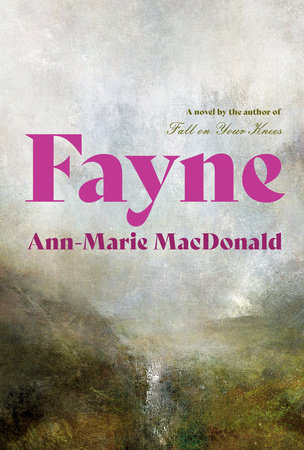
Peter Hemminger Ann Marie MacDonald is an award-winning novelist, a playwright, actor and broadcast host who in 2019 was made an officer of the Order of Canada in recognition for contribution to the arts and her LGBTIQ2SI+ activism. Her writing for the stage includes the plays Goodnight, Desdemona, Good Morning Juliet, and this year’s Hamlet 911, while her novels include Fall on Your Knees, The Way the Crow Flies, Adult Onset and the brand new release Fayne, a tale of science, magic, love and identity set at the border of England and Scotland in the late 19th century.

She’s going to be joining WordFest on October 28th for a conversation there, but she is also joining us this morning for The AM. Ann-Marie MacDonald, thank you so much for calling in. 

Ann-Marie MacDonald Thank you, Peter. I’m delighted to be here, and I can’t wait to be in Calgary. 

PH Have you done a WordFest appearance before? 

AM Oh yeah, yeah. A few years back with Adult Onset, and I did, at that time I did what was called like the High Speed… Oh, hi something rodeo, what was that? 

PH Oh, the High Performance Rodio. With One Yellow Rabbit. 

AM Thank you—High Performance Rodeo, for which I was decorated with a medal. 

PH What was the medal they gave you for that? 

AM It was, I don’t know, with some kind of fun game show format thing and it was completely undeserved. Actually, I think I like someone broke a tie and it really belonged to Michael Crummey. But we’ve made-up since then. It’s OK between us. 

PH No long-lasting grudges from that. 

AM It felt really OK. And I know sometimes that’s how juries work, right? I was the recipient of that flawed process, and this time it went my way. 

PH So you’re going to be coming this just next week, I guess a little over two weeks to talk about your new novel Fayne, which—I know that it’s difficult to describe a 700 page work in a minute or two, but for folks who aren’t familiar with that it, can you give just the high-level summary? 

AM Sure, sure, sure. Remote, windswept, moor. Spooky, crumbling mansion. Mysterious widowed barron. Ultra-charming, brilliant young daughter upon whom he dotes. She has mysterious condition. There are secrets in the house and in the past, many of which are kind of pulsating in this great oil painting portrait that dominates the great sweeping marble staircase. So there is this portrait hangs on the landing and it’s of this gorgeous Irish American heiress, who was Charlotte’s mother, Charlotte being the brilliant 12-year-old. So that’s her gorgeous Irish American mother, who was really rich. And it also depicts Charlotte’s baby brother. And both of these people are dead of course, ’cause it’s a Victorian novel, so the portrait on the stairs has to feature gorgeous, important dead people. 

PH Of course. 

AM And then we find out what became of them and what will become of Charlotte. And there are major questions of identity. 

PH Yeah, and I’m only about five chapters into the work right now, but it very much has the feel of a classic Gothic novel. And you’re a writer who has worked in so many different mediums, written for so many different time periods, has played with metafiction. And I mean Hamlet 911—I didn’t have a chance to see it but the descriptions of that is a piece that plays with a play within a play and commentary on the festival that it’s taking part in—with that kind of breadth of areas that you’ve tackled, how did you land on this? What was it about the Gothic novel that appealed to you? 

AM Well, the Gothic novel is really, for me, foundational. It’s where I began to read as a kid, right?  

I was about 10 years old when I read Jane Eyre for the first time. I was also steeped in Bugs Bunny and The Beatles, and those continued to be like a triumvirate. Those are my triangular points of reference and everything, it can be kind of found within that. 

But I loved the size, and the sweep and the passion and the language. I loved that everything is ultimately connected. That no matter how vast and disperate this world seems to be, everything is intimately connected.  

And that really appeals to me also, I suppose, at a spiritual and political level and at an urgent environmental level. We are connected. All of us, animate and inanimate, right? I think they’re all part of earth and we’re all part of Earth’s consciousness, and that it matters. Everything we do matters. 

There’s also an urgent environmental cri de cœur running through the book, because of course, the moor, the supposedly useless barren moor upon which this story unfolds, is a peat bog, right? And now we understand that peat bogs really are the most important and critical carbon sink in the world as well. They harbor so much about life, and how life burgeons at the margins of the indefinable, soupy primordial margins.  

And that’s what these kinds of landscapes are full of. They’re full of stuff that we haven’t discovered. Stuff that people called magic not too long ago, which we call science now, which we might call magic again tomorrow, you know, and that intersection of—what is magic? What is science? What is spiritual, what is physical, and how are all these things simply a continuum, right? And I feel the same way about identity.  

And then that gets us into the other, you know, I call it my queerest book because it really does take on compulsory heteronormativity, gender, enforced gender norms, and the Victorian era. I mean that was the era of categorization and definition. We’re going to name every species and subspecies, and we’re going to define absolutely everything. And that’s when sex roles become really ironclad, and that’s when class, wealth and class has always been a factor, but certainly gender roles and sex roles become incredibly distinct around that time, too. 

PH One contrast, and I do want to talk about the gender roles that come into the novel, but even just still talking about the landscape that you talk about, that being the era of trying to classify everything, but there’s also been, if you look at the language that used to be used to describe the Moors, I think Robert McFarlane has talked about this wealth of landscape terms for incredibly tiny distinctions of different kinds of land that have been lost over the years and reduced to… I mean windswept moor is a great phrase, but it’s always “windswept moor.” There’s so much specificity that you come to in your language. When you were developing the language to speak about the land, does that affect the way that you’re seeing the world around you? 

AM Oh, absolutely. I mean, that sense of urgency has been with me, I can’t remember when it wasn’t with me, but now I feel it’s it in this book. It’s really impassioned. I feel like the Earth speaks. The Earth is a character. The mud, the very mud is a character in this book. And when I think of that landscape and especially when land turns liquid, almost imperceptibly, when does land become liquid? You know, when does one thing transform into another, and I think of it as a liquid library. You know. Just the richness and the generosity today of our Earth and how she is endlessly—how she-they-he as I make it in the book, which kind of ends with a prayer in that way, really, of gratitude to this entity which continually regenerates and continually escapes our attempts to pin it down. You know, and that’s why I think of it as a liquid library, that mud puddle, you know, we don’t even know what’s in there. Not really, actually. 

PH Yeah, I haven’t really thought of the land in those terms. But I feel like—again, I’m only about five chapters into this book—but there’s so many themes that are already tying together. It’s set in a manor house that exists on the border between England and Scotland, so it’s not really in either. It’s a between place, and the moors themselves are a between place. The time that it’s set in is the emergence of science from a more classical education in some cases, or more folklore based. At what point did you realize that you were writing a work that was set so much, that was so much to do with transitional periods or transitional spaces? 

AM Well, that’s really the key word, isn’t it, transitional? Transitional and transformative.  

I think I intuitively knew that from before the beginning. I wrote a play called Belle Moral back in the 90s, and I became obsessed with transitional species at that point. And then I apply that to everything else, right? Because I think that truth is found in dynamism. We are constantly changing, right? And there are many ways of describing that, whether it’s the second law of thermodynamics or God knows what else, right? But transition is our state. Dynamism is our state. Balance is anything but static. It’s the opposite of static, and that implies uncertainty. But uncertainty can make people feel. It can lead to fear, and fear, of course, is the enemy of thought, is the enemy of curiosity. It’s the enemy of life. It’s the opposite of love. And I think of, really, when I think of it, I think of love as being probably the greatest, most fearsome force that’s going on. Because that’s… Somewhere, Earth is regenerating, constantly, and I I choose to think of that as love. And incredibly powerful. 

PH That curiosity that you speak of… I’m going to bring it back now to talking about the character of Charlotte, and I think this is going to be the last bit that we have a chance to talk about, but she is such an insatiable learner, a person with this, not just a curiosity, I mean curiosity is absolutely what drives her, but this incredible memory as well. She’s well versed in Greek classics. She’s devouring the new cutting-edge science of the late 19th century. How do you keep up with that character’s curiosity as you’re writing them? 

AM Well that just was an excuse to immerse myself and learn. You know, I’m pretty passionate about learning as well, myself.  

She’s way smarter than I am. Luckily, all I had to do was capture and follow her thoughts and back them up with the research that I did, and then get them all together between the pages of a book where they can be on record and experienced by other people. But don’t ever ask me to speak like Charlotte, ’cause I just don’t have her intelligence. I don’t have her audiographic memory, which I really, really had so much fun with.  

I love her passion for learning. I love what kind of a geek she is in that she has to learn how to have a sense of humor, and just her joy and her insatiable curiosity. Yes, I share that, and I have gone very passionately into all the various questions from whether or not—and this is all in my quest to immerse the reader in a world that becomes theirs, such that they forget they’re reading, and they forget that anyone wrote this. That this belongs to them, but they know they’re going to be guided through this story.  

And I love Victorian tropes because we’re familiar with them. And yet they provide a structure for endless surprises, right? What is the mystery behind that big portrait on the stairs? Well, this is a Victorian novel. We know that’s going to be important. And moreover, you as the reader know that this book will fulfill your curiosity and take you somewhere, right? So for me, those are readerly delights. 

Those are the delights that the audience hopes for in the theater, and that’s also why I write. I love to welcome people into a story. I wanted to write the kind of book I would have fun reading, you know, so… And that turned out to be a pretty tall order because I did have to immerse myself into the time and place. But there’s enough that’s very recognizable, and then enough that’s very, very strange, I think, to keep people on the journey. 

PH I’m very much looking forward to taking that journey myself. And for listeners who are eager to learn more about the process of writing this book, there’s so much conversation that can be had around this, and that’s going to be taking place October 28th, 7:00 PM at Memorial Park Library thanks to WordFest, so anyone who wants to check that out can head to wordfest.com to find out the details. Ann-Marie, thank you so much for joining this morning. 

AM Thank you so much Peter. I look forward to it, and all best. 

“Prompt hoarding” and the future of art

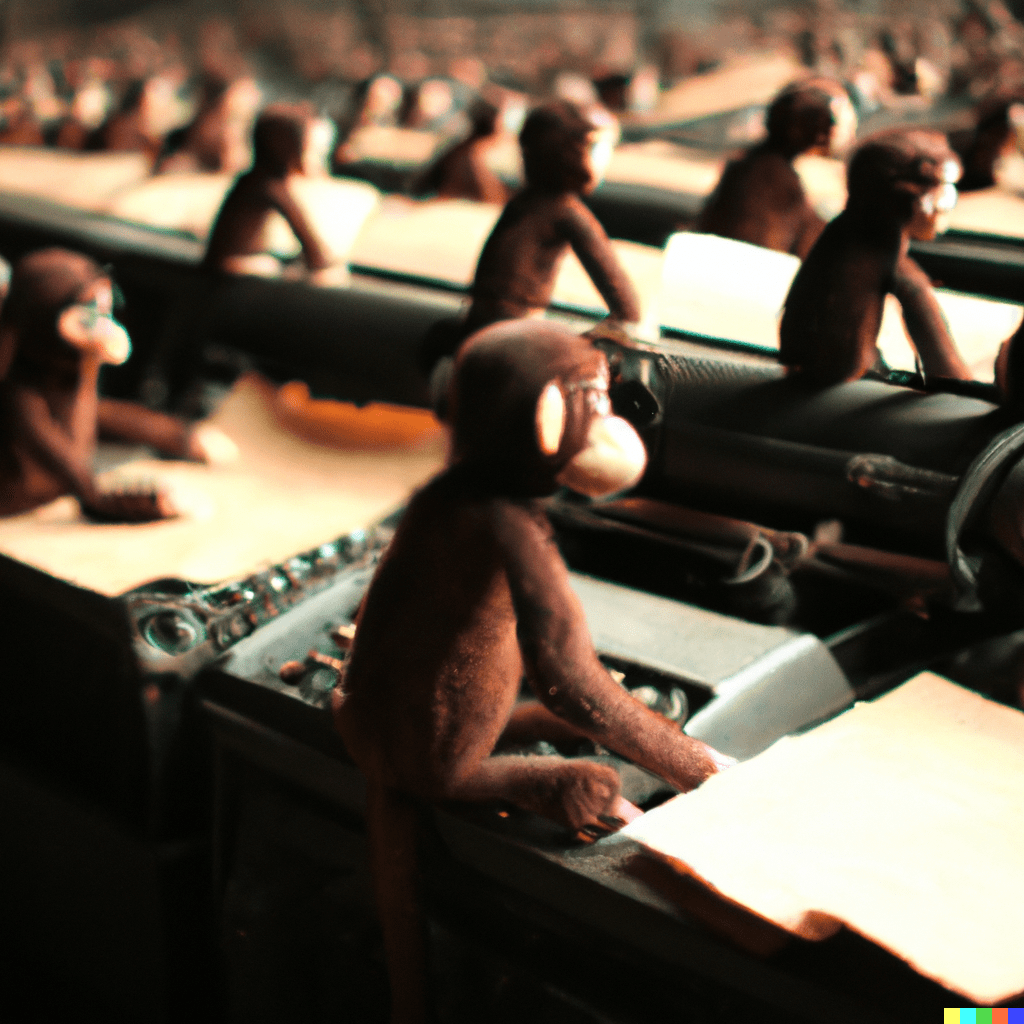
Maybe it’s just that I lean towards the verbal over the visual, but the tweet above from Adam Holwerda struck a chord with me. As much as I agree that having serious conversations around algorithmic appropriation of artistic styles and tech firms profiting off of the labour of emerging artists is essential if we want to understand the impact of computer-generated imagery—as someone without much artistic ability, I can’t deny the appeal of being able to come up with ideas for imagery and within seconds seeing how a machine-learning model can approximate my vague visual suggestions. It’s something different from the feeling I get from actual artistic creation, but it was, to put it crudely, neat.

Switch the medium from visual art to the written word, though, and the criticisms of AI hit closer to home for me. The idea that “future writers are hoarders of prompts” strikes me as deeply dystopian, an abdication of the creative impulse to something superficially related but profoundly different. Because it reduces art to strictly something to be consumed, ignoring the other, literally creative side of the creative process—which is a profound and deeply rooted human drive, with its own inherent value for the creator.

The art that machine-learning creates is, in a way, utilitarian. This isn’t to say it can’t also be beautiful, just that regardless of the intent of the prompter, the goal of the software isn’t expression, it is matching a set of specifications. Its decisions stem from some mix of subject and style that is specified in an initial prompt and likely refined through a series of iterations, the text returning an image that inspires tweaks to the prompt, which returns slightly different images, and so on until an image arrives that is either sufficiently close to the prompter’s original vision, or interesting enough in its own right to be chosen as an end point.

In this sense, creating AI art, at least with our current tools and models, is somewhere between a commission and a negotiation (which all commissions are, to some extent). This isn’t to be dismissive of commissioned pieces, which account for a significant portion of Western art’s canonical works—although notably the credit for those works goes to the artist who made it, not the patron who commissioned it. Some artists are creating fascinating and compelling works with AI tools already, and I’m sure those works will only get more sophisticated. But it strikes me as a very different process from what I’ll call “direct creation” for lack of a better term (acknowledging that all artistic creation is mediated and indirect to at least some extent).

Direct creation involves a different sort of negotiation—a constant self-negotiation, both conscious and unconscious, to refine the ideas you’re exploring. This is something I’m much more familiar with in terms of the written word, so I’ll focus on that here: the value of writing for me isn’t in having an idea and formalizing it in words, but in having an impulse and working it through in the process of writing. It can be slow and painful and full of revision; it can be wonderfully quick in rare instances; but however it happens, it’s a process that relies on reflection, self-knowledge, and some degree of personal growth, however small or indirect.

Getting a finished novel that matched your initial idea to a tee strikes me as almost a monkey’s paw situation. It eliminates the possibility for growth in the artistic process, replacing it with something closer to wish fulfilment. Even ignoring the fact that the algorithmic version of art is one that almost by definiton limits itself to styles and techniques that have already been created, archived, and tagged as art, this sort of creation taken to its extreme (and the tech isn’t there yet) is essentially stagnant. At the risk of romanticizing struggle, eliminating any friction between the creative impulse and its execution robs the artistic process of opportunities for personal growth. You’re no longer working through ideas if the idea leads immediately to the finished work.

All that said, I could see the publishing industry going the route of AI-generated novels, as Holwerda’s tweet imagines. If it went that way, I doubt authors and publishers would be involved at all. It’d more likely be algorithms all the way down, a mix of trending topics and deep personalization that wouldn’t need human interference to maximize engagement and profit. If writing novels can be handed over to the machines, generating ideas for those novels certainly could be, too, with other algorithms surfacing the content most likely to be consumed by each individual. The notion that prompt generation is somehow more immune to automation than any other artistic field strikes me as almost wilfully naive.

The impulse for people to tell stories isn’t going to go away, though. The personal value in hammering out specific wordings, developing metaphors, and working through your own contradictory thoughts is probably significant enough to outweigh the easier but relatively shallower process of creating written works from prompt-generation, at least for a significant subset of people who have the impulse to write.

Maybe what ultimately comes of this is the separation of content generation from artistic creation. When a version of every imaginable image or premise (or melody or whatever else) is available with a few second’s effort, the consumptive side of art, of getting exactly the niche content we want to see, will be as easy as clicking OK. But the need for the creative side of art will still remain. The need to make things—to work through thoughts, to fine-tune compositions, to put your fingers on an instrument and see what sounds you can coax out of it—that experience of creation will remain essential to a well-rounded life.

Our relationship to art has changed dramatically in the last century. Before recorded music was widespread, group singing was common. Recorded music led to professionalization and a percieved separation between performers and listeners that has contributed to the idea that making music is a rarified skill instead of a fundamental part of being human. We’ve become increasingly isolated from forms of expression that should be as natural as breathing.

The onset of AI art might make that worse. If algorithmic art can achieve the sublime, or even approximate it, the entertainment industry is in for a profound reckoning. It might be enough to scare off human creators from even trying to match machine-generated works. Or, it might be freeing. It’s a long shot, but the glut of content might be the reminder we need that the value of art is as at least as much in its creation as in its consumption. At the very least, it’s unlikely that the impulse to create the old fashioned way will ever totally disappear. Whether those more hand-made creations hold any economic value in an algorithmically generated mass entertainment complex, well, only time will tell.

Wild boars are invading Canada

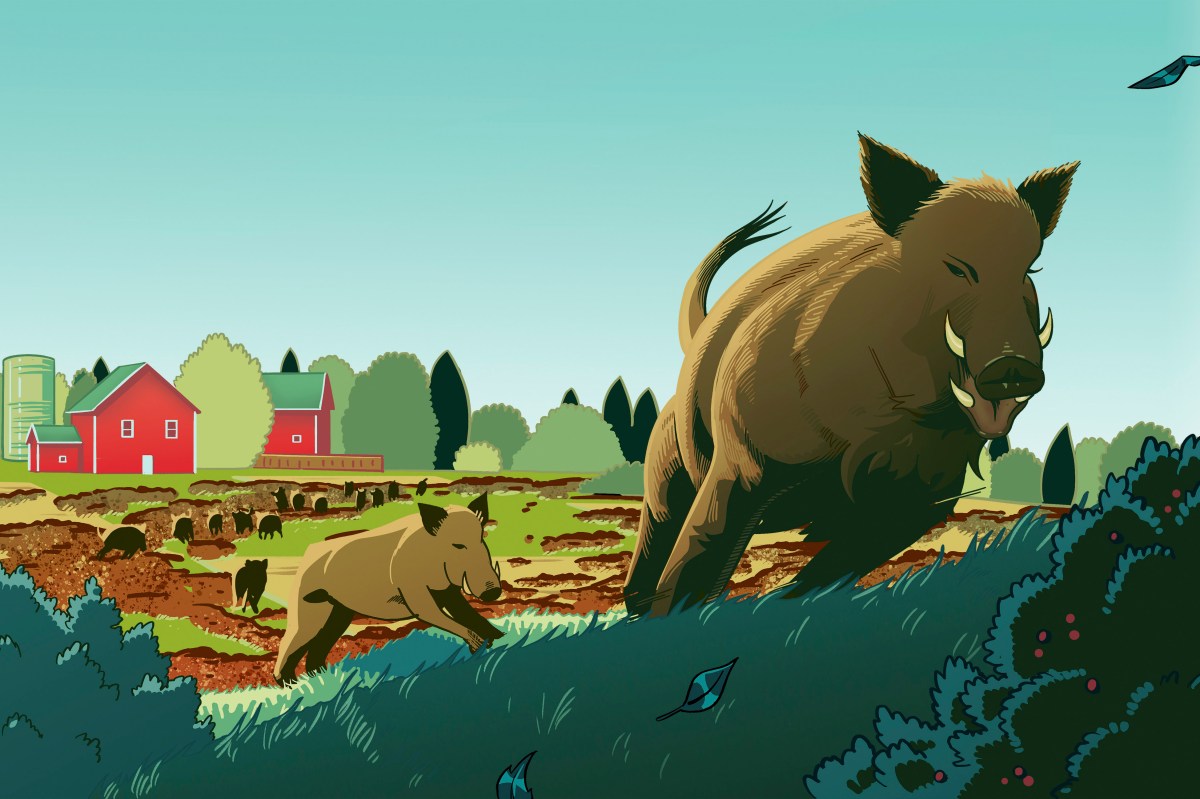
Jana G. Pruden’s article on the ongoing wild boar invasion of Canada is the kind of piece where I can’t go more than a few sentences without quoting something to my partner. Its description of the boars is consistently fascinating and more than a little terrifying, making them seem almost supernaturally tough to control — they’re smart, vicious, mean-spirited, and shockingly fertile.

I have vague memories of hearing about boars escaping in the small town where my grandparents lived in the ’90s, and the town needing to impose a curfew to keep kids from getting gored. At the time it seemed ridiculous, its seriousness tempered by how cartoonish it all sounded to my thoroughly urban self. I never thought it would be a harbinger of a near-future plague of pigs, but here’s Canada’s paper of record publishing quotes like “There’s two types of people in the world: People that have pigs, and people that are about to have pigs.”

Guess I should do my best to enjoy the pig-free present before things go south.

Of course, the only reason the boars are here is because we imported them for farming, then set them free when profits dried up. Or worse, let them loose for game hunting because we knew they were tough and clever and resilient — and now we’re shocked that those same traits are helping them survive. Like any good horror stories, the true monster here is human shortsightedness, hubris, our complete unwillingness to think through (or care about) the consequences of our actions.

How to Grow Old

Beautiful advice from Bertrand Russell on aging gracefully. Interesting the way it treats expansive interests as a sort of ego death, gradually recognizing that the end of the self is at most the briefest of flickers in the flame of existence.

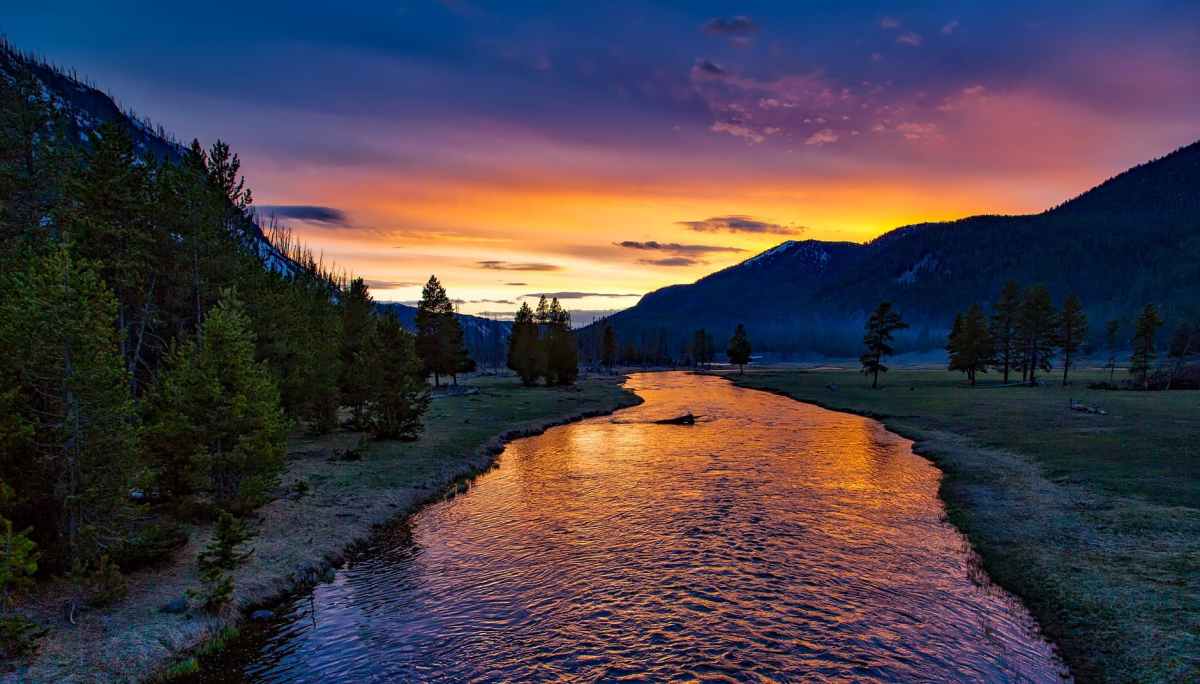
The best way to overcome [an unhealthy fear of dying] — so at least it seems to me — is to make your interests gradually wider and more impersonal, until bit by bit the walls of the ego recede, and your life becomes increasingly merged in the universal life. An individual human existence should be like a river: small at first, narrowly contained within its banks, and rushing passionately past rocks and over waterfalls. Gradually the river grows wider, the banks recede, the waters flow more quietly, and in the end, without any visible break, they become merged in the sea, and painlessly lose their individual being. The man who, in old age, can see his life in this way, will not suffer from the fear of death, since the things he cares for will continue. And if, with the decay of vitality, weariness increases, the thought of rest will not be unwelcome. I should wish to die while still at work, knowing that others will carry on what I can no longer do and content in the thought that what was possible has been done.

Bertrand Russell’s “How to Grow Old”, from Portraits From Memory And Other Essays