From Noema Magazine, a look at ways of cutting down on noise pollution in cities. I live in a neighbourhood where the trains are so loud at night that I can’t sleep without a white noise machine—this isn’t the pleasant chug-chug of trains passing by, it’s the screeching brakes and slamming cars of a rail yard—and have become much more conscious of noise pollution in recent years.
Two examples that really stood out: Germany (and other parts of Europe) use a “quiet asphalt” that has more empty spaces in it, which reduces friction and noise from high-speed traffic. This asphalt is more expensive to maintain, but they’ve made the decision to prioritize a more liveable urban environment, so they extra cost is worth it. And similarly, at least some subways and trains in Japan use rubber wheels instead of steel—again, it costs more to maintain, but they feel it’s worth the cost.
I also appreciated that the article goes beyond talking about just reducing noise to talk about good sound. Silence isn’t the goal, it’s a space that feels alive and welcoming, but that also allows for human interaction and contemplation. Bird sounds, outside conversations that are loud enough to be aware of but quiet enough to remain in the background—once you remove the constant din of urban sounds, there’s room for a soundscape that’s lively and nourishing, instead of damaging.
Our urban environment is something we’ve built and it’s something we can improve. Efficiency has its benefits, but it’s also important to build a world where human comfort is at least a factor in what we’re building. As the article points out, noise pollution affects how we think, how we feel, and our actual physical health—not to mention its impact on the birds and other animals that can make a space feel so welcoming. It’s inspiring to see places where noise is more than just an afterthought.
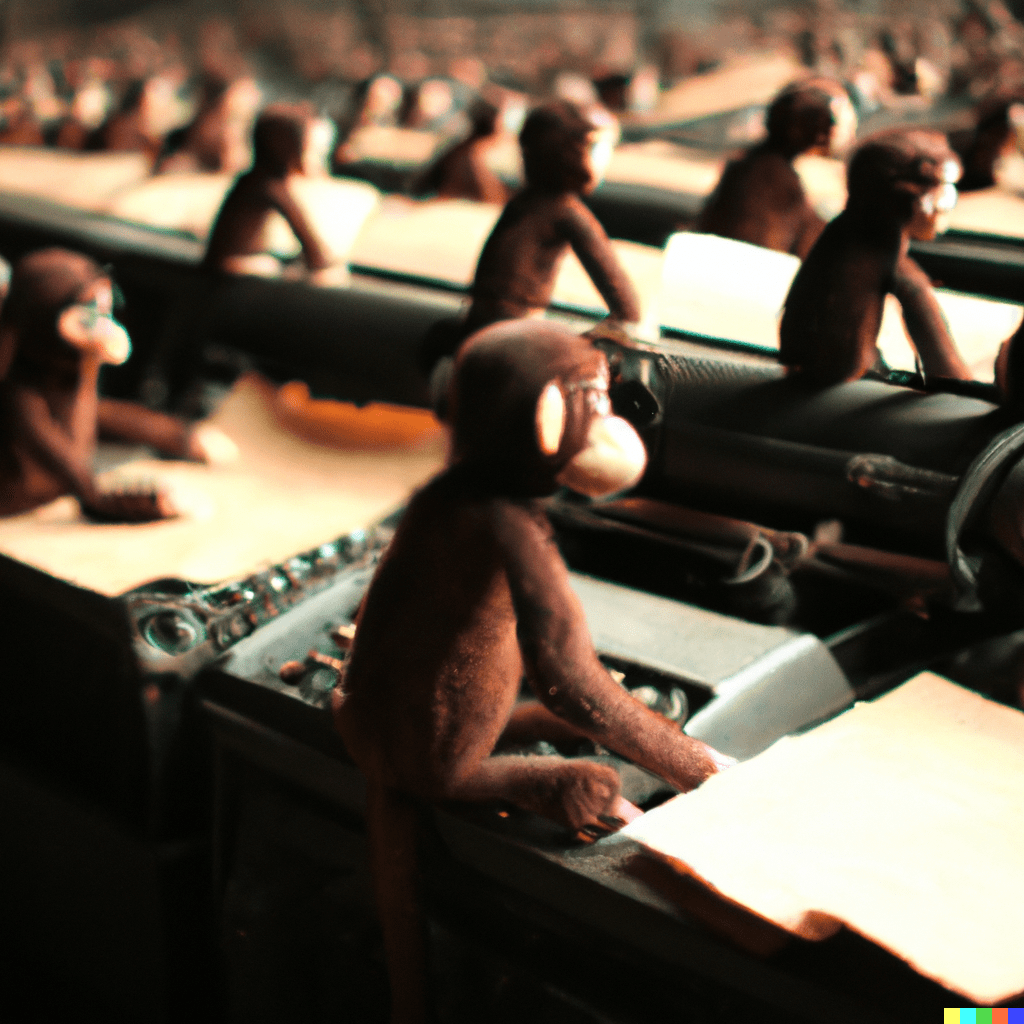
Maybe it’s just that I lean towards the verbal over the visual, but the tweet above from Adam Holwerda struck a chord with me. As much as I agree that having serious conversations around algorithmic appropriation of artistic styles and tech firms profiting off of the labour of emerging artists is essential if we want to understand the impact of computer-generated imagery—as someone without much artistic ability, I can’t deny the appeal of being able to come up with ideas for imagery and within seconds seeing how a machine-learning model can approximate my vague visual suggestions. It’s something different from the feeling I get from actual artistic creation, but it was, to put it crudely, neat.
Switch the medium from visual art to the written word, though, and the criticisms of AI hit closer to home for me. The idea that “future writers are hoarders of prompts” strikes me as deeply dystopian, an abdication of the creative impulse to something superficially related but profoundly different. Because it reduces art to strictly something to be consumed, ignoring the other, literally creative side of the creative process—which is a profound and deeply rooted human drive, with its own inherent value for the creator.
The art that machine-learning creates is, in a way, utilitarian. This isn’t to say it can’t also be beautiful, just that regardless of the intent of the prompter, the goal of the software isn’t expression, it is matching a set of specifications. Its decisions stem from some mix of subject and style that is specified in an initial prompt and likely refined through a series of iterations, the text returning an image that inspires tweaks to the prompt, which returns slightly different images, and so on until an image arrives that is either sufficiently close to the prompter’s original vision, or interesting enough in its own right to be chosen as an end point.
In this sense, creating AI art, at least with our current tools and models, is somewhere between a commission and a negotiation (which all commissions are, to some extent). This isn’t to be dismissive of commissioned pieces, which account for a significant portion of Western art’s canonical works—although notably the credit for those works goes to the artist who made it, not the patron who commissioned it. Some artists are creating fascinating and compelling works with AI tools already, and I’m sure those works will only get more sophisticated. But it strikes me as a very different process from what I’ll call “direct creation” for lack of a better term (acknowledging that all artistic creation is mediated and indirect to at least some extent).
Direct creation involves a different sort of negotiation—a constant self-negotiation, both conscious and unconscious, to refine the ideas you’re exploring. This is something I’m much more familiar with in terms of the written word, so I’ll focus on that here: the value of writing for me isn’t in having an idea and formalizing it in words, but in having an impulse and working it through in the process of writing. It can be slow and painful and full of revision; it can be wonderfully quick in rare instances; but however it happens, it’s a process that relies on reflection, self-knowledge, and some degree of personal growth, however small or indirect.
Getting a finished novel that matched your initial idea to a tee strikes me as almost a monkey’s paw situation. It eliminates the possibility for growth in the artistic process, replacing it with something closer to wish fulfilment. Even ignoring the fact that the algorithmic version of art is one that almost by definiton limits itself to styles and techniques that have already been created, archived, and tagged as art, this sort of creation taken to its extreme (and the tech isn’t there yet) is essentially stagnant. At the risk of romanticizing struggle, eliminating any friction between the creative impulse and its execution robs the artistic process of opportunities for personal growth. You’re no longer working through ideas if the idea leads immediately to the finished work.
All that said, I could see the publishing industry going the route of AI-generated novels, as Holwerda’s tweet imagines. If it went that way, I doubt authors and publishers would be involved at all. It’d more likely be algorithms all the way down, a mix of trending topics and deep personalization that wouldn’t need human interference to maximize engagement and profit. If writing novels can be handed over to the machines, generating ideas for those novels certainly could be, too, with other algorithms surfacing the content most likely to be consumed by each individual. The notion that prompt generation is somehow more immune to automation than any other artistic field strikes me as almost wilfully naive.
The impulse for people to tell stories isn’t going to go away, though. The personal value in hammering out specific wordings, developing metaphors, and working through your own contradictory thoughts is probably significant enough to outweigh the easier but relatively shallower process of creating written works from prompt-generation, at least for a significant subset of people who have the impulse to write.
Maybe what ultimately comes of this is the separation of content generation from artistic creation. When a version of every imaginable image or premise (or melody or whatever else) is available with a few second’s effort, the consumptive side of art, of getting exactly the niche content we want to see, will be as easy as clicking OK. But the need for the creative side of art will still remain. The need to make things—to work through thoughts, to fine-tune compositions, to put your fingers on an instrument and see what sounds you can coax out of it—that experience of creation will remain essential to a well-rounded life.
Our relationship to art has changed dramatically in the last century. Before recorded music was widespread, group singing was common. Recorded music led to professionalization and a percieved separation between performers and listeners that has contributed to the idea that making music is a rarified skill instead of a fundamental part of being human. We’ve become increasingly isolated from forms of expression that should be as natural as breathing.
The onset of AI art might make that worse. If algorithmic art can achieve the sublime, or even approximate it, the entertainment industry is in for a profound reckoning. It might be enough to scare off human creators from even trying to match machine-generated works. Or, it might be freeing. It’s a long shot, but the glut of content might be the reminder we need that the value of art is as at least as much in its creation as in its consumption. At the very least, it’s unlikely that the impulse to create the old fashioned way will ever totally disappear. Whether those more hand-made creations hold any economic value in an algorithmically generated mass entertainment complex, well, only time will tell.
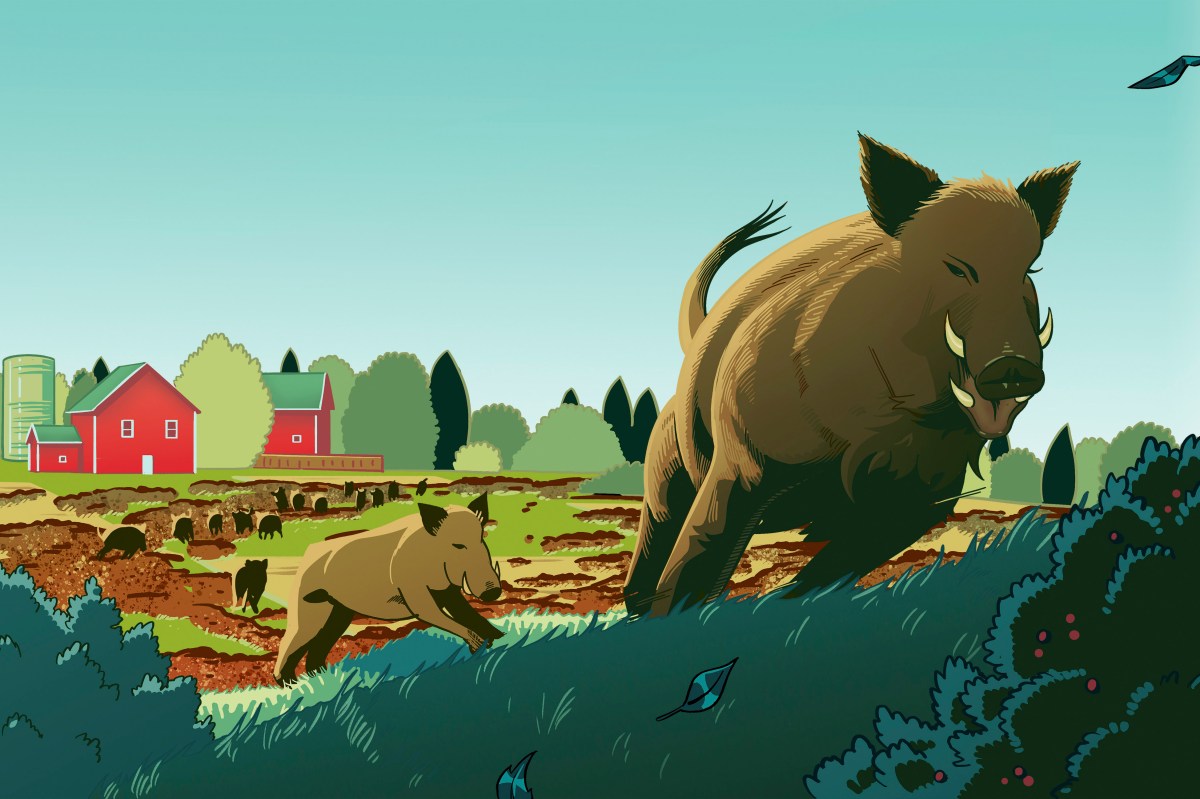
Jana G. Pruden’s article on the ongoing wild boar invasion of Canada is the kind of piece where I can’t go more than a few sentences without quoting something to my partner. Its description of the boars is consistently fascinating and more than a little terrifying, making them seem almost supernaturally tough to control — they’re smart, vicious, mean-spirited, and shockingly fertile.
Wild boars are one of the most invasive, adaptable and destructive mammals on the planet. They can live almost anywhere and eat anything. They’re disastrous to agriculture and spread bacteria.🐗
I have vague memories of hearing about boars escaping in the small town where my grandparents lived in the ’90s, and the town needing to impose a curfew to keep kids from getting gored. At the time it seemed ridiculous, its seriousness tempered by how cartoonish it all sounded to my thoroughly urban self. I never thought it would be a harbinger of a near-future plague of pigs, but here’s Canada’s paper of record publishing quotes like “There’s two types of people in the world: People that have pigs, and people that are about to have pigs.”
Guess I should do my best to enjoy the pig-free present before things go south.
Of course, the only reason the boars are here is because we imported them for farming, then set them free when profits dried up. Or worse, let them loose for game hunting because we knew they were tough and clever and resilient — and now we’re shocked that those same traits are helping them survive. Like any good horror stories, the true monster here is human shortsightedness, hubris, our complete unwillingness to think through (or care about) the consequences of our actions.
Beautiful advice from Bertrand Russell on aging gracefully. Interesting the way it treats expansive interests as a sort of ego death, gradually recognizing that the end of the self is at most the briefest of flickers in the flame of existence.
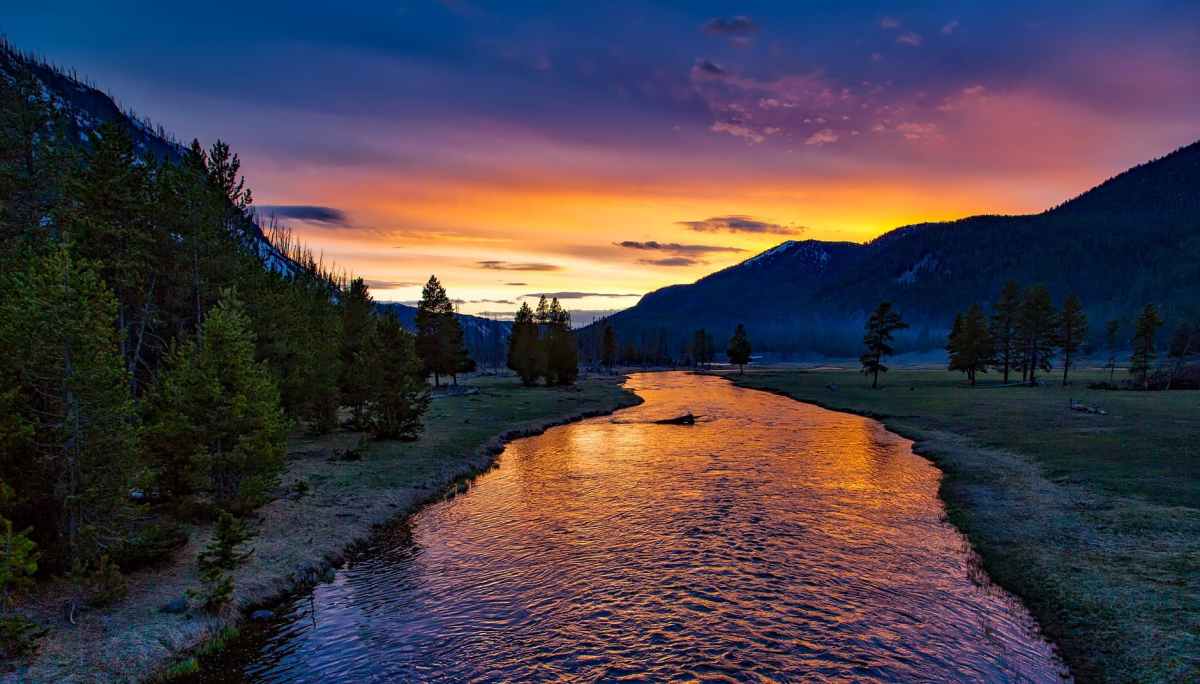
The best way to overcome [an unhealthy fear of dying] — so at least it seems to me — is to make your interests gradually wider and more impersonal, until bit by bit the walls of the ego recede, and your life becomes increasingly merged in the universal life. An individual human existence should be like a river: small at first, narrowly contained within its banks, and rushing passionately past rocks and over waterfalls. Gradually the river grows wider, the banks recede, the waters flow more quietly, and in the end, without any visible break, they become merged in the sea, and painlessly lose their individual being. The man who, in old age, can see his life in this way, will not suffer from the fear of death, since the things he cares for will continue. And if, with the decay of vitality, weariness increases, the thought of rest will not be unwelcome. I should wish to die while still at work, knowing that others will carry on what I can no longer do and content in the thought that what was possible has been done.
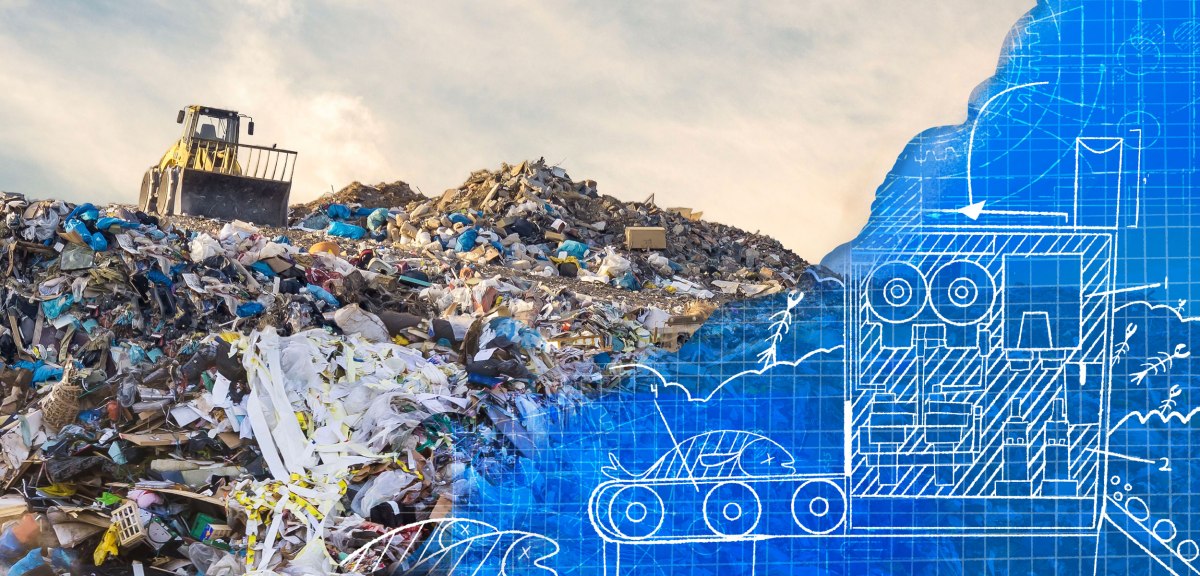
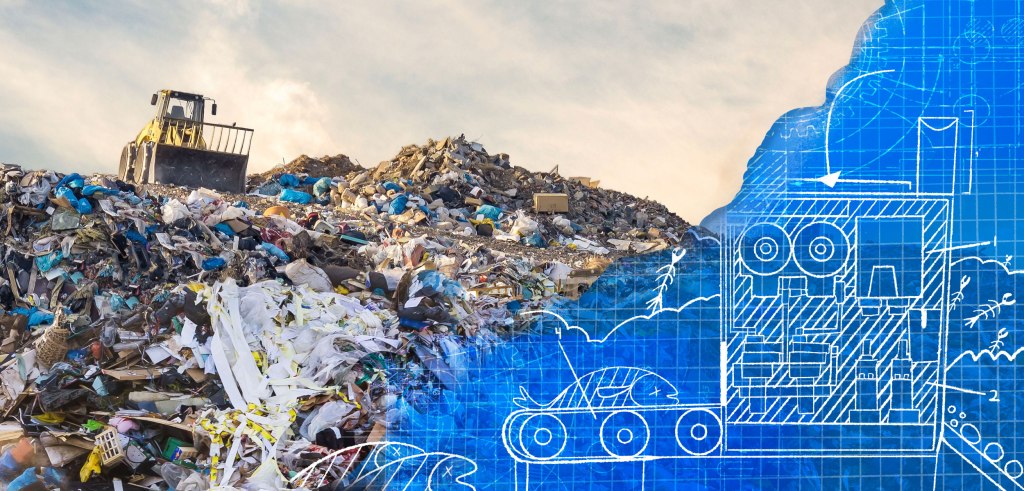
(from Hakai Magazine: Photo by vchal/Shutterstock, illustration by Mercedes Minck)
I’ve been in pretty dire need of more optimistic stories lately, and this piece in Hakai Magazine is a good start. A look at 3F Waste Recovery, a Newfoundland start-up that repurposes waste from fishing, farming, and forestry to create consumer products, it touches on circular economies; creative re-use of waste materials; resilient communities; and embracing experimentation and failure as paths to learning; all in a very grounded, practical context. The headline frames it as a utopian sci-fi concept brought to life, but I appreciated how the article itself acknowledges the role the community’s own historical practices played in developing 3F’s vision:
Lynch bristles at the notion that this model is anything new. “It’s talked about as this brand-new idea, and it’s not,” Lynch says. “And so the history of it matters.”
It also made me think of this piece from Low Tech Magazine‘s “Obsolete Technology” series on urban fish ponds as a surprisingly efficient and sustainable form of sewage treatment. That one’s a fair bit more academic, and the subject matter is even more squeamish than the 3F piece (which still gets into fish guts and other unsavory topics), but it was also one of the most memorable pieces I read last year. It’s also on a solar-powered website that contains a handy weather forecast for its local area so you can see when it might have to go offline. Very cool.
“The problem is whether we are determined to go in the direction of compassion or not… If I lose my direction, I have to look for the North Star, and I go to the north. That does not mean I expect to arrive at the North Star. I just want to go in that direction.” ― Thich Nhat Hanh, Being Peace
It’s important to understand the difference between directions and destinations. We typically set goals based on destinations rather than directions, because a destination is clear and unambiguous. A target, if clearly set and understood, will either be met or it won’t. You motivate yourself towards it, and celebrate your arrival once you reach it.
The limitation of destinations is that they are rooted in the known. They can’t take you further than what you already understand, because your current understanding is what chooses the destination. Directions, on the other hand, aren’t meant to be reached. We don’t set our direction to the North Star because we mistakenly believe it’s within our reach. We choose it because sometimes the unreachable is the clearest view we have of where we want to be.
Directions require an embrace of ambiguity and uncertainty. In striving towards something like compassion (in Hanh’s case), or empathy, or reconciliation, there is no point at which you can say you’ve done it, you’ve reached your goal and now you can stop. There are days where you stay on course, and others veer wildly off track. There are days where you don’t move at all, and others where the wind is at your back and the distance passes easily. And whichever day you have, your reward is to do it again the next day.
Destinations are an important tool in motivating ourselves to keep moving. It’s easier to climb a hill when we imagine ourselves basking in the view at the top. But if we have the courage to follow a direction instead of a destination, then we acknowledge we will never be perfect, we can always do better, and we won’t let our preconceptions stop us from traveling farther.
It was an essay about podcasting and Spotify, of all things, that helped me understand something new about apocalyptic fiction. I probably shouldn’t have been surprised by the insight, given that the essay was written by Roxane Gay, but it still caught me off guard. Gay was writing about her (justifiable) unwillingness to share her work on a platform that gave $100 to $200 million to Joe Rogan while claiming to be a content-agnostic bastion of free expression, but it was an early tangent on the appeal of survivalist reality TV that hit me:
“It’s clear that what these modern-day hermits want is to exist in a vacuum,” she wrote, “where they are not affected by nor do they affect anything beyond the boundaries of their home. That is, certainly, an illusion, but I can see the appeal.”
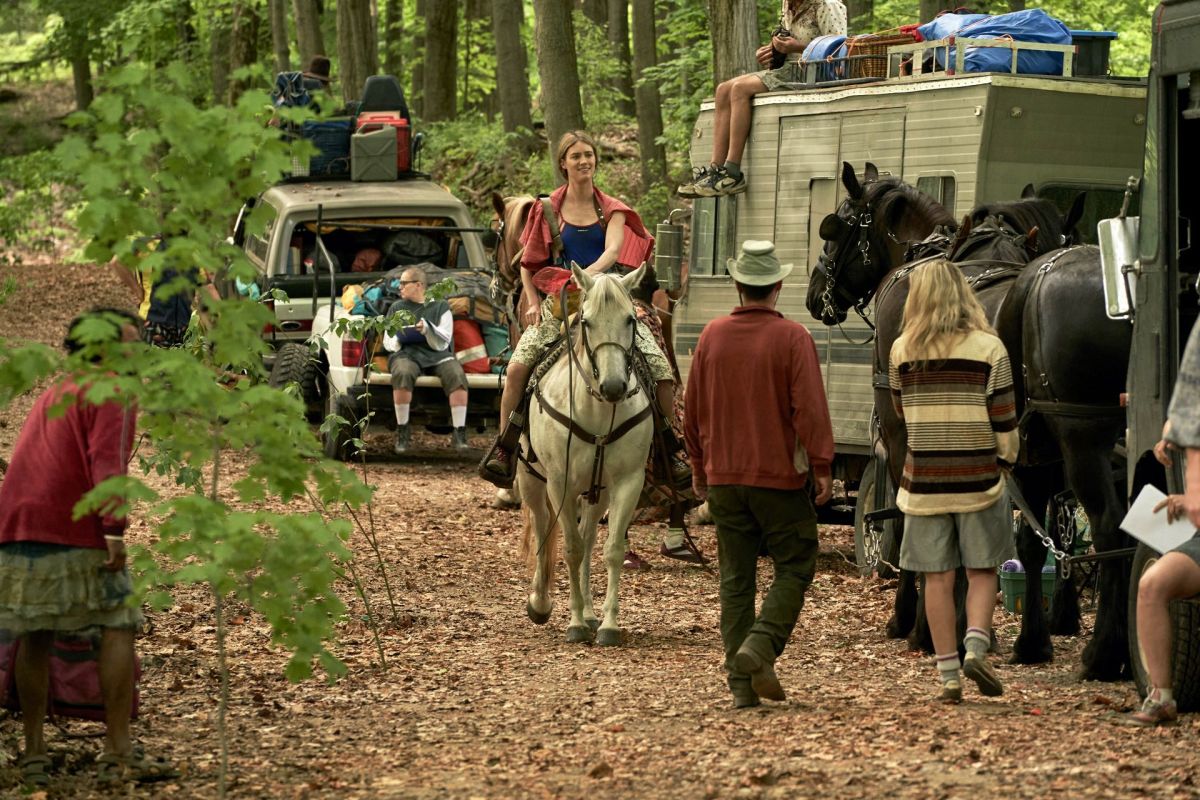
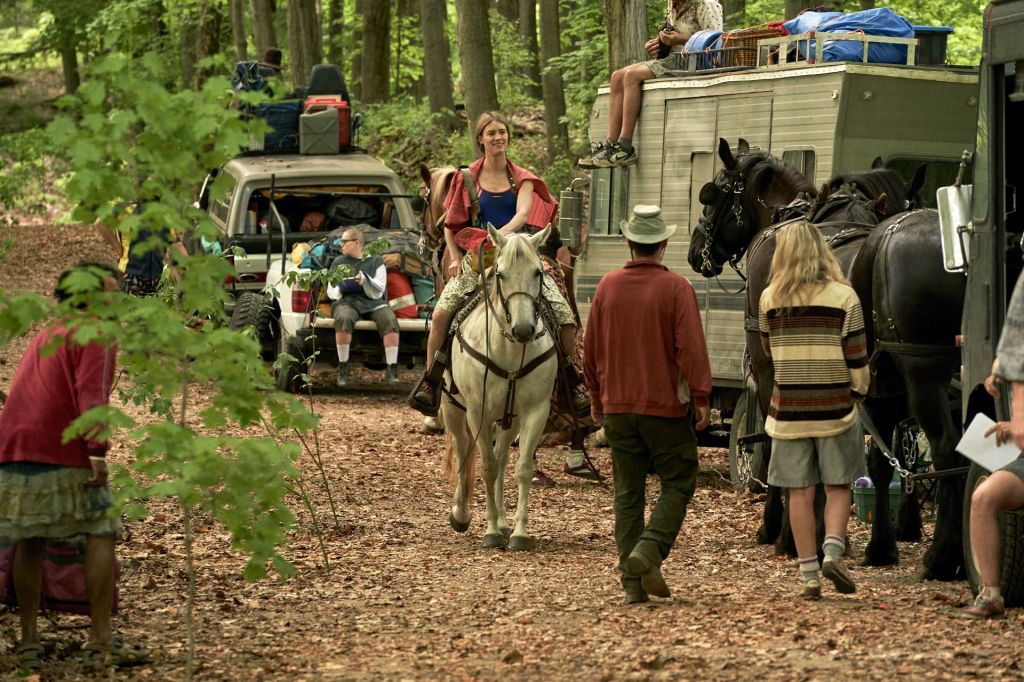
I’d just finished watching HBO’s Station Eleven when I read that article. The post-apocalyptic drama had been popping up everywhere, and all I knew about it before starting it was that it involved a theatre troupe that had emerged after some kind of global catastrophe. That was enough to sell me. I’ve seen a lot of films and TV shows about the end of the world, but they always tackle the immediate aftermath, and they’re always about survival. As dramatic as that can be, it’s such a limited topic in the scope of the human experience. I wanted something about rebuilding, and a show about art in the face of annihilation sounded like something made just for me.
As it turned out, Station Eleven wasn’t quite the show I thought it was, although it did have elements of what I imagined. Where the vast majority of mainstream fiction set in the aftermath of calamity take every opportunity to show humanity at its Hobbesian worst, taking as a given that we’re only a handful of hardships away from a war of all against all, Station Eleven tried to capture a wider swathe of the human experience. It understood that the compulsive desire for art, expression, and inspiration have been part of our nature for as long as humans have been around, sharing space with and helping to mitigate our more negative impulses. Ultimately it seemed like the show was more interested in exploring what makes a family than making a statement on the fundamental nature of our species, but at least it felt a little more optimistic than the average apocalyptic tale.
What Gay’s essay showed me, though, was that what lies at the heart of so much disaster fiction is the same thing that makes those modern-day hermits so watchable: the simplicity of it all. That may seem like a strange thing to say about fictional worlds where threats hide around every corner and scrounging up a meal is a matter of life and death, but what those stories all share is a wiping away of social complexity in favour of pure survival. It’s horror, but it’s also a fantasy: the fantasy of the hard reset.
Social reality is incredibly complicated. As Gay explores in her essay, none of us exist in a vacuum. The decisions we make all have consequences, and those consequences are often so intricate and multilayered that it’s almost impossible to track their ethical implications. When something as seemingly straightforward as buying a chocolate bar has a better-than-not chance of supporting child slavery, it’s easy to toss up your hands and say morality is just too ambiguous—a theme that was explored surprisingly well in the sitcom The Good Place, for what it’s worth. Cruelty and exploitation aren’t just the long-buried foundations of our political and economic system, they’re still actively necessary for keeping our day-to-day world running. And where our extension cords and supply chains used to be long enough to keep the costs of our lifestyle out of sight, our ever-more-networked world keeps reminding us of consequences we’d rather stay blind to. Every day gives new examples of one inescapable truth: absolutely nothing is simple.
In that world, the appeal of the fantasy of the hard reset is obvious. When the disaster hits, history ceases to be a continuum. The complicated web of causes and effects that we’re currently worried about gets reduced to a single threat: zombies, cannibals, and marauders may be unpleasant, but they’re also unambiguous. We can wrap our heads around the threat and our relationship to it in a way we just can’t with essentially any contemporary issue.
Survival also tends to be an individualist affair in those spec-fic worlds, which plays into the desire for simplicity. Stereotypical post-apocalyptic science fiction idolizes the lone survivor, the jack-of-all-trades and master of most who doesn’t need your help to get by. Never mind that he had to learn those skills from someone, or more likely from a large number of someones. Never mind that those skills were honed over generations by societies of one form or another, passed along by teachers and caregivers, preserved by knowledge-keepers and storytellers. Never mind that the only reason we were able to develop those survivalist skills in the first place was through cooperative communities dividing up tasks to allow for specialization and growth. That communal history was wiped out by The Event, whatever it may be, leaving only the individual.
Once you recognize the Fantasy of the Hard Reset, you can’t stop seeing it. Its most dramatic manifestations may be in ideas like the singularity or the Metaverse (let’s scrap the physical world for a fresh start in a digital wonderland) or the notion of Martian colonies as an ecological escape hatch (as if terraforming a whole world from scratch is somehow simpler than finding a way to exist on the only planet we’re remotely adapted to), but it has been at the root of almost every techno-utopian fantasy. The internet will let us abandon the politics and philosophy of nation-states for a truly borderless world. Disruptive apps can shed the weight of regulations and oversight without any negative repercussions. Time and again, people convince themselves that we can shake off our current reality through cleverness and will. They imagine we can make a clean break from history, and then wonder why things spiral out of control.
I’ve been wondering how much the fantasy version of apocalypse is clouding our ability to act on issues like COVID and climate change and democratic decline. It sometimes feels like we’re so consumed by a need for narrative that we deny the reality of anything that doesn’t operate on the clear logic of beginnings and endings. We ask ourselves when the disaster phase of climate change will start, as if that’s a question of fact and not one of arbitrary definition. We look at emission targets and temperature goals as if they’re on-off switches between safety and chaos, when they’re points along spectrums of probabilities. We want things to be binary. They almost never are.
The hard reset only exists in the narrative realm, not the physical one. It marks the end of an old word and a beginning of a new one, when reality doesn’t have beginnings and endings, just effects and causes, which are in themselves effects of other causes. Beginnings are useful in storytelling, but with the possible exception of the big bang (and even that is debatable), nothing emerges free from initial conditions. As badly as we may want to believe we can start fresh, either now or in the near future with a magical technology, it is ultimately a form of escapism: a way to avoid responsibility for the world we’ve built.
Narratives can be troublesome, but they can also be enlightening, so let’s take it back to Station Eleven. At first I was frustrated with how the show kept flashing back to the days before its world-changing pandemic. I was more interested in the story of rebuilding, and especially in the role of art as a central aspect of our humanity. Because of that disappointment, I almost missed one of the show’s most insightful aspects, which I’ll try to share with as few spoilers as possible.
One of the series’ main conflicts is between a group of people dedicated to remembering the pre-disaster world, and a faction who believe that the only way forward is to erase that past and start anew. The show doesn’t present those stories in a chronological fashion, though; it loops back and forth between the early days of the disease and a world that, 20 or so years later, is still dangerous but at least verging on a kind of functionality. And although it’s hard to imagine a cleaner break from history than a disease wiping out 90% of humanity, those temporal leaps make it clear that even that wasn’t enough to sever the influence of history. The decisions that were made before the disaster, and the people our central characters were before the disaster, were still shaping the “new” world.
In other words, the world changing isn’t enough to provide a fresh start, because there is no version of the future that doesn’t emerge from the past. Imagining a clean break is the same impulse as the modern-day hermit wishing they could live in a vacuum—it’s a wish for simplicity rooted in a refusal to accept the complexity and uncertainty that are fundamental to existing as social creatures in a cumulative culture.
Despite what this apocalyptic fantasy may hope, and despite what some utopian fantasies advocate, the way forward isn’t to sever ourselves from the past. It’s to confront that past, to look at how it shaped the world and how it shaped ourselves. We need to understand the impulses that have led us to the brink of ecological disaster, and what they say about our relationship to the Earth. It isn’t enough for the world to change, because the world is always chaning anyway. We have to change ourselves.
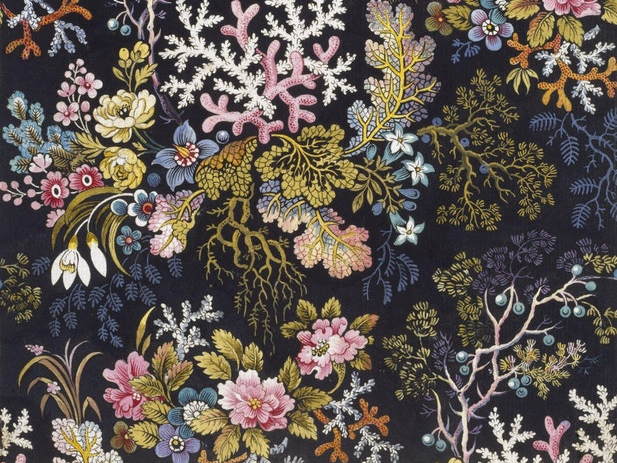
From Charles F. Durant’s Algae and Corallines of the Bay & Harbor of New York (1850), via Public Domain Review
A lovely essay from the Public Domain Review, on the 18th and 19th century fad of seaweed collection, touching on its countercultural and feminist connections, and some of the fascinating figures who became obsessed with the “useless” plants. Sasha Archibald captures the strange allure of seaweed collecting, seen by its advocates as a more refined alternative to the more obvious, less subtle pleasure of flower collecting. This passage on the hobby’s effect on air-balloon pioneer, pseudoscience debunker and generally fascinating character Charles Durant really struck me:
His research served only to remind him, again and again, how partial his knowledge was. Algology is a concession, and a surrender too. Durant seems to bow his head before the “unfathomable abyss” of his topic, which proves “too wide, too deep, too vast for perfect exploration”. Seaweed chastened his ego, and abasement made space for love.
My first piece for Longreads was published this week, sharing five articles about listening to nature. The Reading List format is a pretty natural one for me—I’m much more comfortable sharing other people’s thoughts than passing off my own as in any way authoritative—and the process of writing it helped me to clarify some of my own thoughts on music, noise, and silence
It also led to a conversation with a friend about their own experience of listening to music, and how it can be a way to take us out of the present, “to go someplace that isn’t this, either to the past or the craving for something new.”
I think there’s definitely truth in that, but there’s a positive side to it, too. A while back, I started seeing a certain kind of active musical listening as essentially training wheels for being present in a moment. To really enjoy a song, you have to ride along with it and get lost in it, experiencing each note as it comes. In the last few years, I’ve been working on getting that same experience of a stretch of time without the music.
For a long time, though, I thought the training wheels were the bicycle. Music has been such an accessible way to get fully absorbed in the flow of time that I never thought to wonder if it was keeping me from experiencing something more. Now that I’ve made the connection, though, I’ve found one of the best ways to enjoy silence and contemplation is to imagine it as music without the music. It makes emotional and intuitive sense even if I can’t quite explain it in more depth.
In any case, go read the piece on Longreads, and enjoy some thoughtful writing by much wiser folks than me.
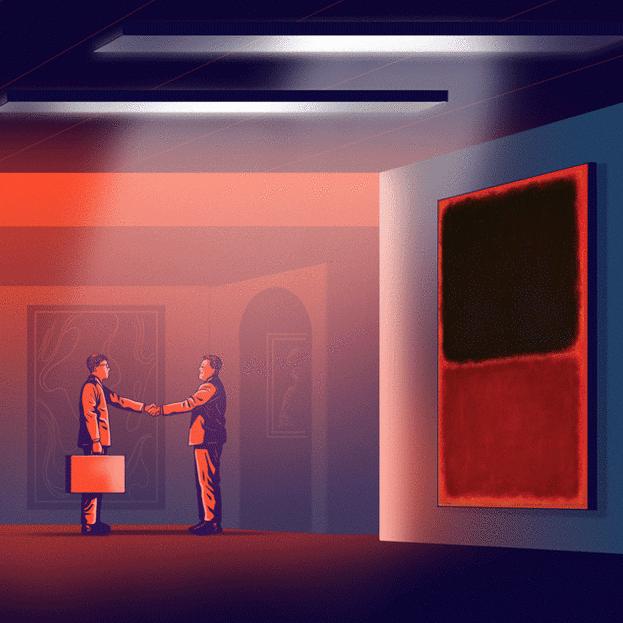
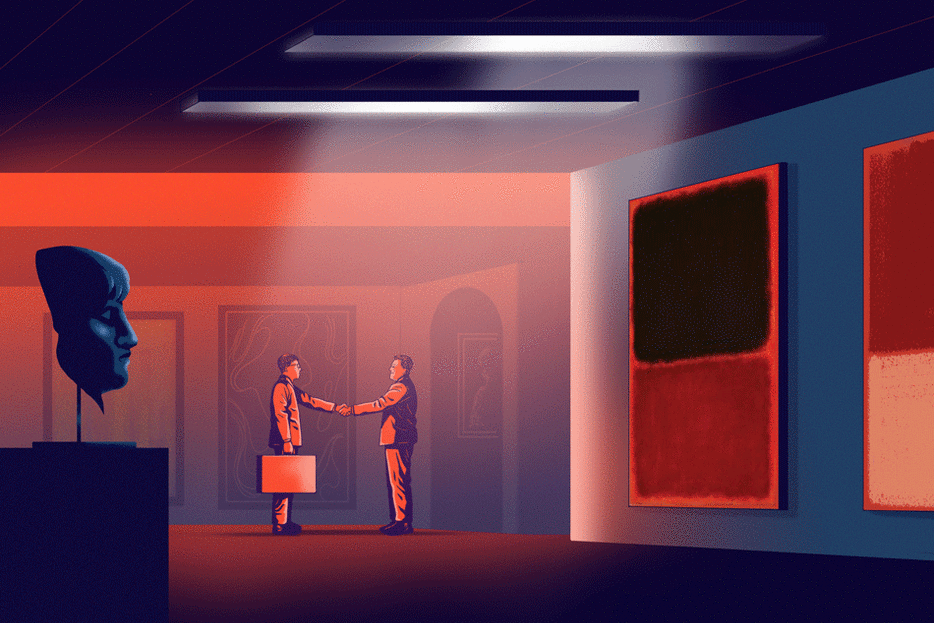
A blend of a whodunnit, art appreciation, and political analysis, Richard Warnica’s Hazlitt piece Rothko at the Inauguration traces the history and repercussions of one of New York’s biggest art scandals, its connection to Donald Trump’s inauguration, and the lasting impact of the battle over Rothko’s legacy.
As much as I appreciated the art scene intrigue, it’s Warnica’s own obsession with Rothko that really stuck with me. Describing the impact of those paintings is no easy task. Seeing a photo doesn’t do them justice; there’s an emotional power to them that only really comes with seeing them in person, a combination of their scale and some mysterious aspect of their technique. You can feel that struggle in the way Warnica talks about the paintings, a mix of straightforward description and pure emotion:
“There were purples and greens, blues, oranges, tans: all of them arranged in stacked blocks of colour with those tide pool edges—the spaces in-between where everything combines. I don’t know how long I sat there. I know I cried, although even now I’d have trouble breaking down the exact alchemy of why.”
“Rothko at the Inauguration” is about institutional rot and the corrupting influence of “easy” money, along with the way the financialization of fine art has played into those stories. Where some writers approach that subject with academic detachment, Warnica never forgets how art gained that power in the first place. Before it became just one more financial vehicle, a faceless asset in a tax-sheltered storage facility, it was a gateway to transcendence.



 Wander Lines