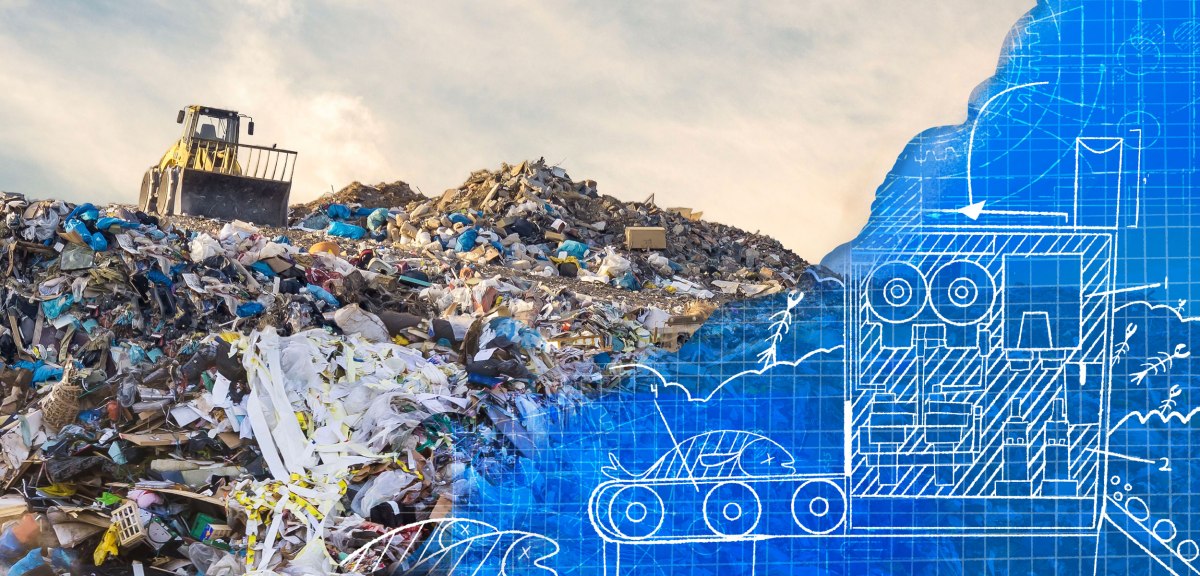
(from Hakai Magazine: Photo by vchal/Shutterstock, illustration by Mercedes Minck)
I’ve been in pretty dire need of more optimistic stories lately, and this piece in Hakai Magazine is a good start. A look at 3F Waste Recovery, a Newfoundland start-up that repurposes waste from fishing, farming, and forestry to create consumer products, it touches on circular economies; creative re-use of waste materials; resilient communities; and embracing experimentation and failure as paths to learning; all in a very grounded, practical context. The headline frames it as a utopian sci-fi concept brought to life, but I appreciated how the article itself acknowledges the role the community’s own historical practices played in developing 3F’s vision:
Lynch bristles at the notion that this model is anything new. “It’s talked about as this brand-new idea, and it’s not,” Lynch says. “And so the history of it matters.”
It also made me think of this piece from Low Tech Magazine‘s “Obsolete Technology” series on urban fish ponds as a surprisingly efficient and sustainable form of sewage treatment. That one’s a fair bit more academic, and the subject matter is even more squeamish than the 3F piece (which still gets into fish guts and other unsavory topics), but it was also one of the most memorable pieces I read last year. It’s also on a solar-powered website that contains a handy weather forecast for its local area so you can see when it might have to go offline. Very cool.
“The problem is whether we are determined to go in the direction of compassion or not… If I lose my direction, I have to look for the North Star, and I go to the north. That does not mean I expect to arrive at the North Star. I just want to go in that direction.” ― Thich Nhat Hanh, Being Peace
It’s important to understand the difference between directions and destinations. We typically set goals based on destinations rather than directions, because a destination is clear and unambiguous. A target, if clearly set and understood, will either be met or it won’t. You motivate yourself towards it, and celebrate your arrival once you reach it.
The limitation of destinations is that they are rooted in the known. They can’t take you further than what you already understand, because your current understanding is what chooses the destination. Directions, on the other hand, aren’t meant to be reached. We don’t set our direction to the North Star because we mistakenly believe it’s within our reach. We choose it because sometimes the unreachable is the clearest view we have of where we want to be.
Directions require an embrace of ambiguity and uncertainty. In striving towards something like compassion (in Hanh’s case), or empathy, or reconciliation, there is no point at which you can say you’ve done it, you’ve reached your goal and now you can stop. There are days where you stay on course, and others veer wildly off track. There are days where you don’t move at all, and others where the wind is at your back and the distance passes easily. And whichever day you have, your reward is to do it again the next day.
Destinations are an important tool in motivating ourselves to keep moving. It’s easier to climb a hill when we imagine ourselves basking in the view at the top. But if we have the courage to follow a direction instead of a destination, then we acknowledge we will never be perfect, we can always do better, and we won’t let our preconceptions stop us from traveling farther.
It was an essay about podcasting and Spotify, of all things, that helped me understand something new about apocalyptic fiction. I probably shouldn’t have been surprised by the insight, given that the essay was written by Roxane Gay, but it still caught me off guard. Gay was writing about her (justifiable) unwillingness to share her work on a platform that gave $100 to $200 million to Joe Rogan while claiming to be a content-agnostic bastion of free expression, but it was an early tangent on the appeal of survivalist reality TV that hit me:
“It’s clear that what these modern-day hermits want is to exist in a vacuum,” she wrote, “where they are not affected by nor do they affect anything beyond the boundaries of their home. That is, certainly, an illusion, but I can see the appeal.”
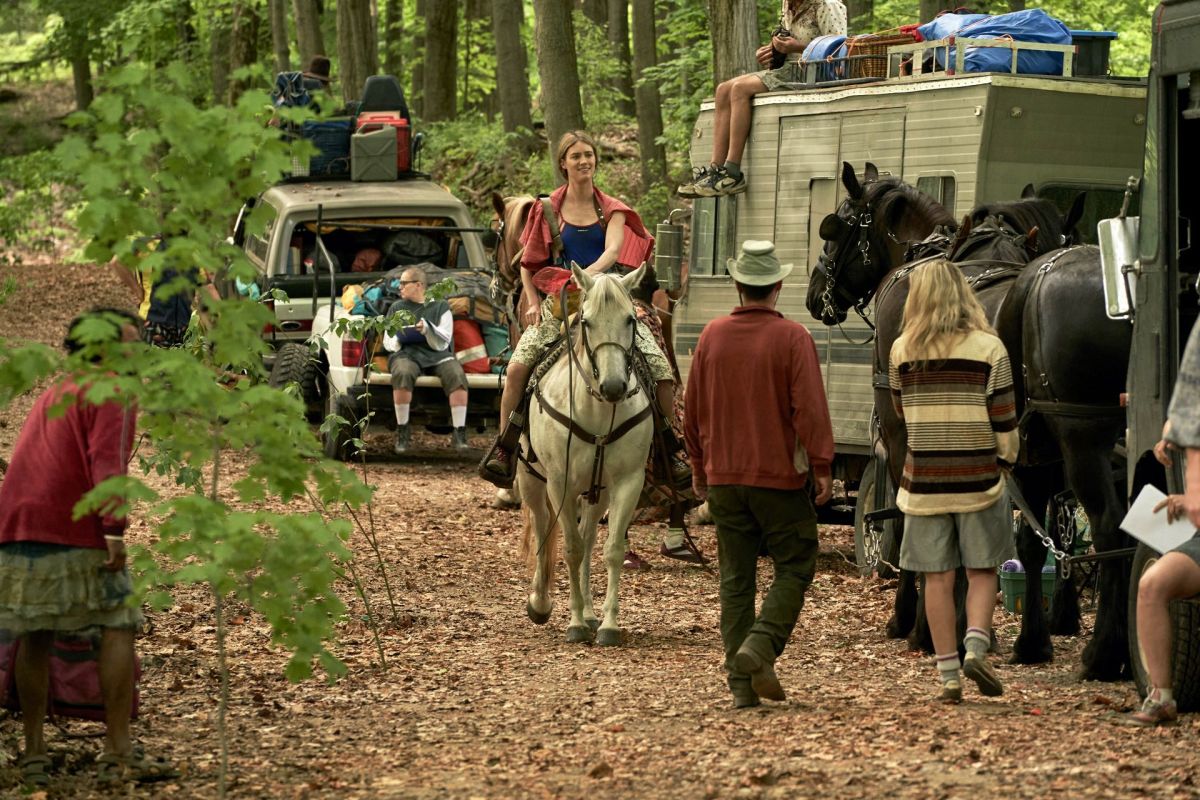
I’d just finished watching HBO’s Station Eleven when I read that article. The post-apocalyptic drama had been popping up everywhere, and all I knew about it before starting it was that it involved a theatre troupe that had emerged after some kind of global catastrophe. That was enough to sell me. I’ve seen a lot of films and TV shows about the end of the world, but they always tackle the immediate aftermath, and they’re always about survival. As dramatic as that can be, it’s such a limited topic in the scope of the human experience. I wanted something about rebuilding, and a show about art in the face of annihilation sounded like something made just for me.
As it turned out, Station Eleven wasn’t quite the show I thought it was, although it did have elements of what I imagined. Where the vast majority of mainstream fiction set in the aftermath of calamity take every opportunity to show humanity at its Hobbesian worst, taking as a given that we’re only a handful of hardships away from a war of all against all, Station Eleven tried to capture a wider swathe of the human experience. It understood that the compulsive desire for art, expression, and inspiration have been part of our nature for as long as humans have been around, sharing space with and helping to mitigate our more negative impulses. Ultimately it seemed like the show was more interested in exploring what makes a family than making a statement on the fundamental nature of our species, but at least it felt a little more optimistic than the average apocalyptic tale.
What Gay’s essay showed me, though, was that what lies at the heart of so much disaster fiction is the same thing that makes those modern-day hermits so watchable: the simplicity of it all. That may seem like a strange thing to say about fictional worlds where threats hide around every corner and scrounging up a meal is a matter of life and death, but what those stories all share is a wiping away of social complexity in favour of pure survival. It’s horror, but it’s also a fantasy: the fantasy of the hard reset.
Social reality is incredibly complicated. As Gay explores in her essay, none of us exist in a vacuum. The decisions we make all have consequences, and those consequences are often so intricate and multilayered that it’s almost impossible to track their ethical implications. When something as seemingly straightforward as buying a chocolate bar has a better-than-not chance of supporting child slavery, it’s easy to toss up your hands and say morality is just too ambiguous—a theme that was explored surprisingly well in the sitcom The Good Place, for what it’s worth. Cruelty and exploitation aren’t just the long-buried foundations of our political and economic system, they’re still actively necessary for keeping our day-to-day world running. And where our extension cords and supply chains used to be long enough to keep the costs of our lifestyle out of sight, our ever-more-networked world keeps reminding us of consequences we’d rather stay blind to. Every day gives new examples of one inescapable truth: absolutely nothing is simple.
In that world, the appeal of the fantasy of the hard reset is obvious. When the disaster hits, history ceases to be a continuum. The complicated web of causes and effects that we’re currently worried about gets reduced to a single threat: zombies, cannibals, and marauders may be unpleasant, but they’re also unambiguous. We can wrap our heads around the threat and our relationship to it in a way we just can’t with essentially any contemporary issue.
Survival also tends to be an individualist affair in those spec-fic worlds, which plays into the desire for simplicity. Stereotypical post-apocalyptic science fiction idolizes the lone survivor, the jack-of-all-trades and master of most who doesn’t need your help to get by. Never mind that he had to learn those skills from someone, or more likely from a large number of someones. Never mind that those skills were honed over generations by societies of one form or another, passed along by teachers and caregivers, preserved by knowledge-keepers and storytellers. Never mind that the only reason we were able to develop those survivalist skills in the first place was through cooperative communities dividing up tasks to allow for specialization and growth. That communal history was wiped out by The Event, whatever it may be, leaving only the individual.
Once you recognize the Fantasy of the Hard Reset, you can’t stop seeing it. Its most dramatic manifestations may be in ideas like the singularity or the Metaverse (let’s scrap the physical world for a fresh start in a digital wonderland) or the notion of Martian colonies as an ecological escape hatch (as if terraforming a whole world from scratch is somehow simpler than finding a way to exist on the only planet we’re remotely adapted to), but it has been at the root of almost every techno-utopian fantasy. The internet will let us abandon the politics and philosophy of nation-states for a truly borderless world. Disruptive apps can shed the weight of regulations and oversight without any negative repercussions. Time and again, people convince themselves that we can shake off our current reality through cleverness and will. They imagine we can make a clean break from history, and then wonder why things spiral out of control.
I’ve been wondering how much the fantasy version of apocalypse is clouding our ability to act on issues like COVID and climate change and democratic decline. It sometimes feels like we’re so consumed by a need for narrative that we deny the reality of anything that doesn’t operate on the clear logic of beginnings and endings. We ask ourselves when the disaster phase of climate change will start, as if that’s a question of fact and not one of arbitrary definition. We look at emission targets and temperature goals as if they’re on-off switches between safety and chaos, when they’re points along spectrums of probabilities. We want things to be binary. They almost never are.
The hard reset only exists in the narrative realm, not the physical one. It marks the end of an old word and a beginning of a new one, when reality doesn’t have beginnings and endings, just effects and causes, which are in themselves effects of other causes. Beginnings are useful in storytelling, but with the possible exception of the big bang (and even that is debatable), nothing emerges free from initial conditions. As badly as we may want to believe we can start fresh, either now or in the near future with a magical technology, it is ultimately a form of escapism: a way to avoid responsibility for the world we’ve built.
Narratives can be troublesome, but they can also be enlightening, so let’s take it back to Station Eleven. At first I was frustrated with how the show kept flashing back to the days before its world-changing pandemic. I was more interested in the story of rebuilding, and especially in the role of art as a central aspect of our humanity. Because of that disappointment, I almost missed one of the show’s most insightful aspects, which I’ll try to share with as few spoilers as possible.
One of the series’ main conflicts is between a group of people dedicated to remembering the pre-disaster world, and a faction who believe that the only way forward is to erase that past and start anew. The show doesn’t present those stories in a chronological fashion, though; it loops back and forth between the early days of the disease and a world that, 20 or so years later, is still dangerous but at least verging on a kind of functionality. And although it’s hard to imagine a cleaner break from history than a disease wiping out 90% of humanity, those temporal leaps make it clear that even that wasn’t enough to sever the influence of history. The decisions that were made before the disaster, and the people our central characters were before the disaster, were still shaping the “new” world.
In other words, the world changing isn’t enough to provide a fresh start, because there is no version of the future that doesn’t emerge from the past. Imagining a clean break is the same impulse as the modern-day hermit wishing they could live in a vacuum—it’s a wish for simplicity rooted in a refusal to accept the complexity and uncertainty that are fundamental to existing as social creatures in a cumulative culture.
Despite what this apocalyptic fantasy may hope, and despite what some utopian fantasies advocate, the way forward isn’t to sever ourselves from the past. It’s to confront that past, to look at how it shaped the world and how it shaped ourselves. We need to understand the impulses that have led us to the brink of ecological disaster, and what they say about our relationship to the Earth. It isn’t enough for the world to change, because the world is always chaning anyway. We have to change ourselves.
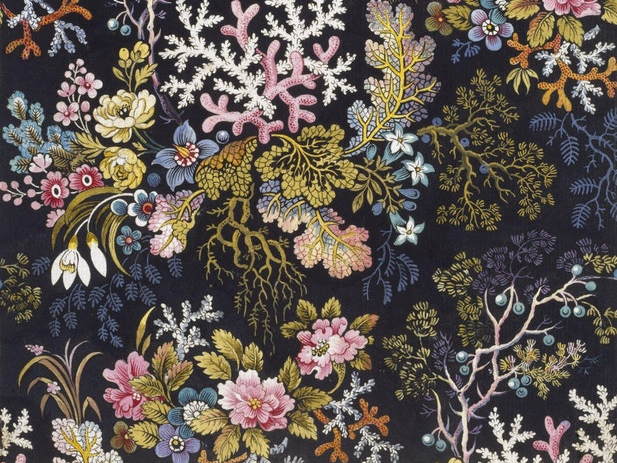
From Charles F. Durant’s Algae and Corallines of the Bay & Harbor of New York (1850), via Public Domain Review
A lovely essay from the Public Domain Review, on the 18th and 19th century fad of seaweed collection, touching on its countercultural and feminist connections, and some of the fascinating figures who became obsessed with the “useless” plants. Sasha Archibald captures the strange allure of seaweed collecting, seen by its advocates as a more refined alternative to the more obvious, less subtle pleasure of flower collecting. This passage on the hobby’s effect on air-balloon pioneer, pseudoscience debunker and generally fascinating character Charles Durant really struck me:
His research served only to remind him, again and again, how partial his knowledge was. Algology is a concession, and a surrender too. Durant seems to bow his head before the “unfathomable abyss” of his topic, which proves “too wide, too deep, too vast for perfect exploration”. Seaweed chastened his ego, and abasement made space for love.
(I’m trying to get in the habit of distilling some of the key concepts from the books I read, instead of just letting them wash over me before moving onto the next.I’m pushing 40, my memory isn’t what it used to be, and the act of summarizing is still one of the best ways for me to internalize a lesson.)
In trying to pin down the traits that have helped humanity thrive over our 35,000 post-Ice Age years, Gaia Vince lists four key technologies: Fire, Language, Beauty and Time. Really, though, she’s listing four aspects of a single technology. While I never would have thought to connect them in this way, Vince makes a compelling case that those four ideas, broadly defined, are all ways of offloading the work of evolutionary adaptation to external energy sources:
When humans began deliberately accessing resources of energy beyond their own muscle power, they transcended the realm of biological life and entered a new state of being.
In this reading, fire takes on many roles that would otherwise have to be done by the body: cooking food is a sort of pre-digestion, making it easier for our stomachs to break down tough meats and vegetables; it wards off predators overnight, allowing for more rest; it alters landscapes, creating grasslands that are more favourable to the endurance hunting techniques humans favour and making things more difficult for the other predators we compete with. The list goes on, but the commonality is that instead of relying on the energy we’re able to create with our own bodies, we outsource those energy needs to transcend our physical limitations.
Of course, that consumptive outsourcing has gotten us into all kinds of trouble over the millenia, and is at the root of most of our current environmental and cultural issues. There’s no denying that it has let us accomplish far more than we ever could have with our bodies alone.
Vince’s list of technologies gets more abstract as it goes, which is appropriate given that abstraction is such a seemingly unique human trait. Language offloads the energy requirements of teaching, allows for complex thoughts, and seems to structure how we percieve the world to such an extent that multilingual people will give different answers to questions of preference or opinion depending what language they are speaking at the time. It also allows for a “cumulative culture,” where knowledge gained by one person and one generation can be built on by the next, which is the key to the exponential growth of our technological sophistication.
Beauty, in Vince’s telling, is a tool for binding us as cooperative societies, promoting trade, specialization, and community. Time is the most tenuous of the topics, allowing for a conception of a future that led to multi-generational mega-projects and monoliths, and eventually to the predictive systems of science. It also moved us out of touch with our own natural bodily cycles as we increasingly defined reality and dictated behaviour through more objective, external measurements of time.
Humanity isn’t particularly well adapted to most of the environments we inhabit—at least not physically. Instead, we have a “developing bath” of culture, environment, and genetics, all of which influence each other, and which allow us to adapt to new situations at a pace that genetic evolution alone could never manage. As Vince says,
Local knowledge is indispensable because of an evolutionary trade-off, in which our species gave up innate adaptation to an ancestral habitat in return for the culturally adaptive versatility to survive any environment.
In her conclusion, Vince makes the argument that humanity is on the verge of transcending again, into a superorganism she calls Homo omnis, or Homni. Comparing humanity to a slime mold isn’t immediately flattering, but it’s an interesting thought; the mold is a collection of individual organisms that can, in times of stress, act as if it is one larger organism, capable of things that the individual units never could.
The book’s ending is a hopeful one, focusing on humanity’s collective triumphs while still nodding towards the (largely self-created) challenges we face. Homni seems a step too far for me, mostly because recent years have challenged my belief in our potential for collective action. But maybe that’s just me focusing too much on the short term, unable to pull back and see our deep history, or project into our deep future. I hope there’s at least some truth to it, that the pattern of transcending our limitations continues. Because Vince is right; our potential is tremendous.
My first piece for Longreads was published this week, sharing five articles about listening to nature. The Reading List format is a pretty natural one for me—I’m much more comfortable sharing other people’s thoughts than passing off my own as in any way authoritative—and the process of writing it helped me to clarify some of my own thoughts on music, noise, and silence
It also led to a conversation with a friend about their own experience of listening to music, and how it can be a way to take us out of the present, “to go someplace that isn’t this, either to the past or the craving for something new.”
I think there’s definitely truth in that, but there’s a positive side to it, too. A while back, I started seeing a certain kind of active musical listening as essentially training wheels for being present in a moment. To really enjoy a song, you have to ride along with it and get lost in it, experiencing each note as it comes. In the last few years, I’ve been working on getting that same experience of a stretch of time without the music.
For a long time, though, I thought the training wheels were the bicycle. Music has been such an accessible way to get fully absorbed in the flow of time that I never thought to wonder if it was keeping me from experiencing something more. Now that I’ve made the connection, though, I’ve found one of the best ways to enjoy silence and contemplation is to imagine it as music without the music. It makes emotional and intuitive sense even if I can’t quite explain it in more depth.
In any case, go read the piece on Longreads, and enjoy some thoughtful writing by much wiser folks than me.
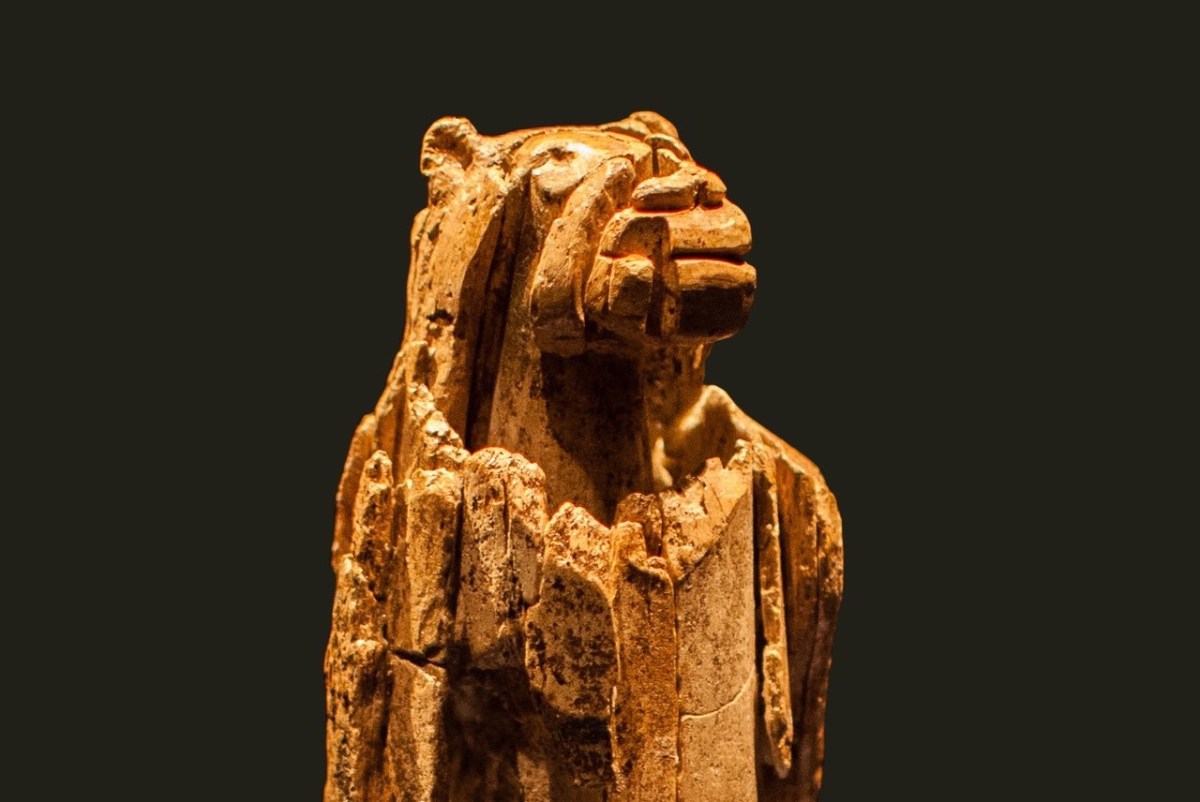
The Lion-Person (its intended gender is the subject of debate) is “the oldest known physical representation of a supernatural being,” a 30cm figurine dating back approximately 40,000 years. Carved from a mammoth tusk, scientists estimate it would have taken a skilled person around 400 hours to create with the tools of the era.
That long of a process implies that the culture that produced it made room for artists or craftspeople, excusing them from at least some of the more survival-oriented duties of the tribe to create objects of beauty and imagination. As the British Museum’s Jill Cook puts it (quoted in Wikipedia), the object points to “… a relationship to things unseen, to the vital forces of nature, that you need to perhaps propitiate, perhaps connect to, in order to ensure your successful life.”
As incredible as the artifact itself is, I was also surprised to learn that is in a museum in Ulm, a relatively small German city on the border of Bavaria. I would just assume that something like this would be in one of the world’s largest or best resourced museums. It just goes to show what wonders you can stumble across in unexpected places.
(Found through a reference in Gaia Vince’s book Transcendence, which is packed with so many fascinating asides that I’ve had to stop bugging my partner with them and start sharing them here.)
Read in preparation for Bridle’s upcoming Ways of Being, which sounds like a more optimistic expansions of New Dark Age’s themes. Not that I think Bridle was wrong to be concerned about the consequences of our current technological direction, and New Dark Age makes an excellent case that the desire to conflate the real with the computable is causing more harm than good. Well-chosen examples make for an enjoyable read, but Bridle’s critiques have permeated the culture over the last few years. Diagnosing the problem is important, but dark as things get, the future never truly ends, and I’m looking forward to something with a little more hope.
If there’s one key arguments I took from this—and given its massive scope, it’s probably foolish to reduce it to a single message—but if there is, it’s that society and humanity are much more malleable than we usually think. The Davids take it as their task to complicate our notion of pre-history. Instead of a straightforward progression from utopian foraging cultures to hierarchical farming states, they point out that there’s been an incredible variety in how societies organize. Some societies even change their models seasonally, choosing different structures, hierarchies, and even identities throughout the year.
Given all that variety, the question is: how did we get so stuck in one model of society, and how do we start imagining a way forward? I’ve seen grumblings that Dawn of Everything’s history isn’t as radical as it presents itself, and that it isn’t as accurate as it should be, but taken as a prompt for imagining better futures, it’s still well worth a read.
Maria Popova’s Marginalian blog prompted this one, and while her summary does a fantastic job capturing both the meaning and the spirit of Schrödinger’s essays, I’m still glad to have read its entirety. Popular memory of cultural figures tends to reduce them to a single idea, and for Schrödinger it’s the one thought experiment; if it wasn’t for Popova’s post I would never have guessed he was writing on notions of panpsychism or universal consciousness while he was also helping redefine our understand of the nature of reality. His writing is wonderfully poetic in places (“What is it that has called you so suddenly out of nothingness to enjoy for a brief while a spectacle which remains quite indifferent to you?”), a touch overly technical in others, but I guess that’s to be expected for someone with such wide-roaming thoughts.
Referenced in Jack Young’s phenomenal essay, Making sense of our multispecies world: Body-Forest as community, Garza’s book is something like a detective story, a poem, a fairy tale, and a collection of cryptic koans. Difficult to pin down, in other words, but fortunately it’s short enough to be read in one sitting, which makes it more inviting for future re-reading. Given how obliquely it approaches its subjects, it strikes me as one that will reward time spent percolating in the unconscious, too.
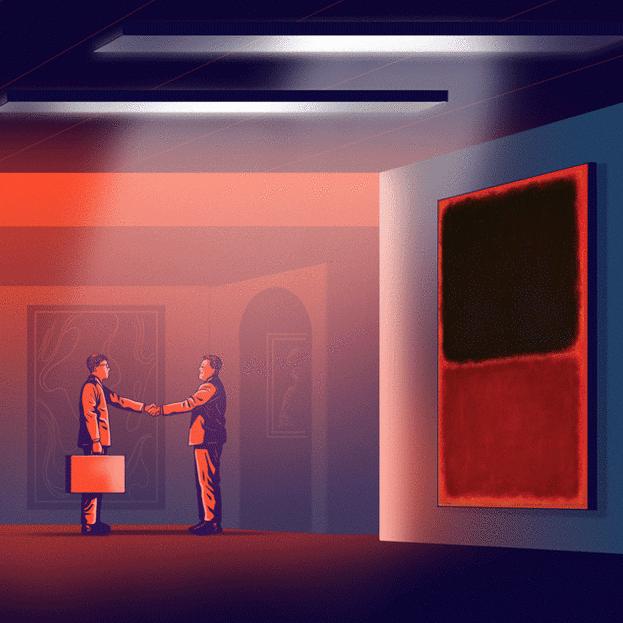
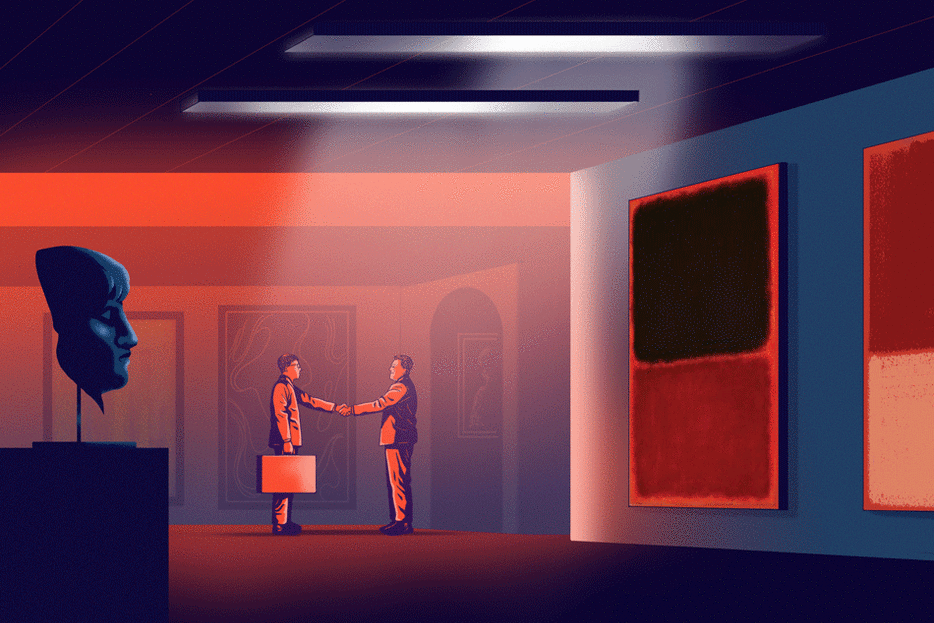
A blend of a whodunnit, art appreciation, and political analysis, Richard Warnica’s Hazlitt piece Rothko at the Inauguration traces the history and repercussions of one of New York’s biggest art scandals, its connection to Donald Trump’s inauguration, and the lasting impact of the battle over Rothko’s legacy.
As much as I appreciated the art scene intrigue, it’s Warnica’s own obsession with Rothko that really stuck with me. Describing the impact of those paintings is no easy task. Seeing a photo doesn’t do them justice; there’s an emotional power to them that only really comes with seeing them in person, a combination of their scale and some mysterious aspect of their technique. You can feel that struggle in the way Warnica talks about the paintings, a mix of straightforward description and pure emotion:
“There were purples and greens, blues, oranges, tans: all of them arranged in stacked blocks of colour with those tide pool edges—the spaces in-between where everything combines. I don’t know how long I sat there. I know I cried, although even now I’d have trouble breaking down the exact alchemy of why.”
“Rothko at the Inauguration” is about institutional rot and the corrupting influence of “easy” money, along with the way the financialization of fine art has played into those stories. Where some writers approach that subject with academic detachment, Warnica never forgets how art gained that power in the first place. Before it became just one more financial vehicle, a faceless asset in a tax-sheltered storage facility, it was a gateway to transcendence.
The NYT Magazine looks at how sophisticated AI has completely changed the way professional poker players approach the game. As the article says, finding tools and tricks to override human instinct and understand probabilities has always been part of the game, but it’s still a bit eerie reading about top players finding ways to turn themselves into extensions of a computer algorithm, memorizing decision trees and developing tricks for generating random numbers in order to emulate the program’s preferred strategy.






 Wander Lines