Congotronics International – Banza/Beyond

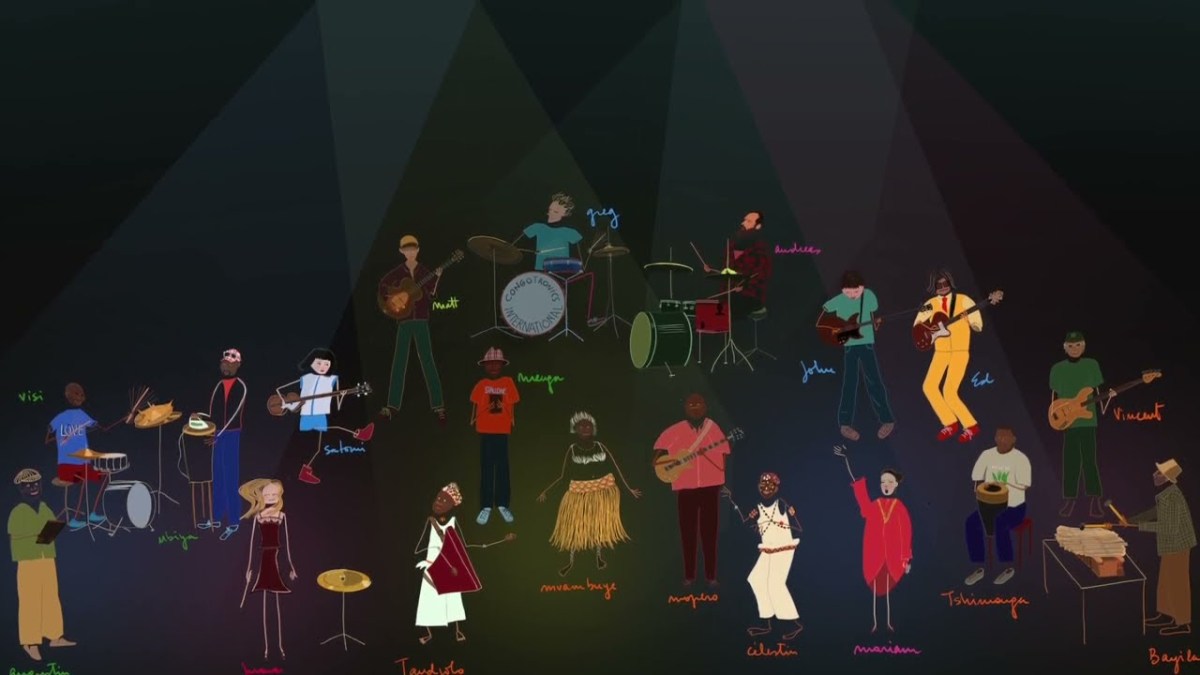
Ten years in the making, the debut from the supergroup Congotronics International is sounding fantastic so far. The two singles released so far really highlight the group’s range. “Banza Banza” is as raucous as heck, a high-energy mish-mash of skronked-out guitars, distorted thumb organs, and other unexpected sounds. “Beyond the 7th Bend” is more subtle, with acoustic guitars, meandering melodies, and atmosphere to spare. Between the two, it’s about as promising as it gets.

The full album is due out on April 29, with contributions from Konono Nº1, Deerhoof, Juana Molina, and more. I can’t wait.

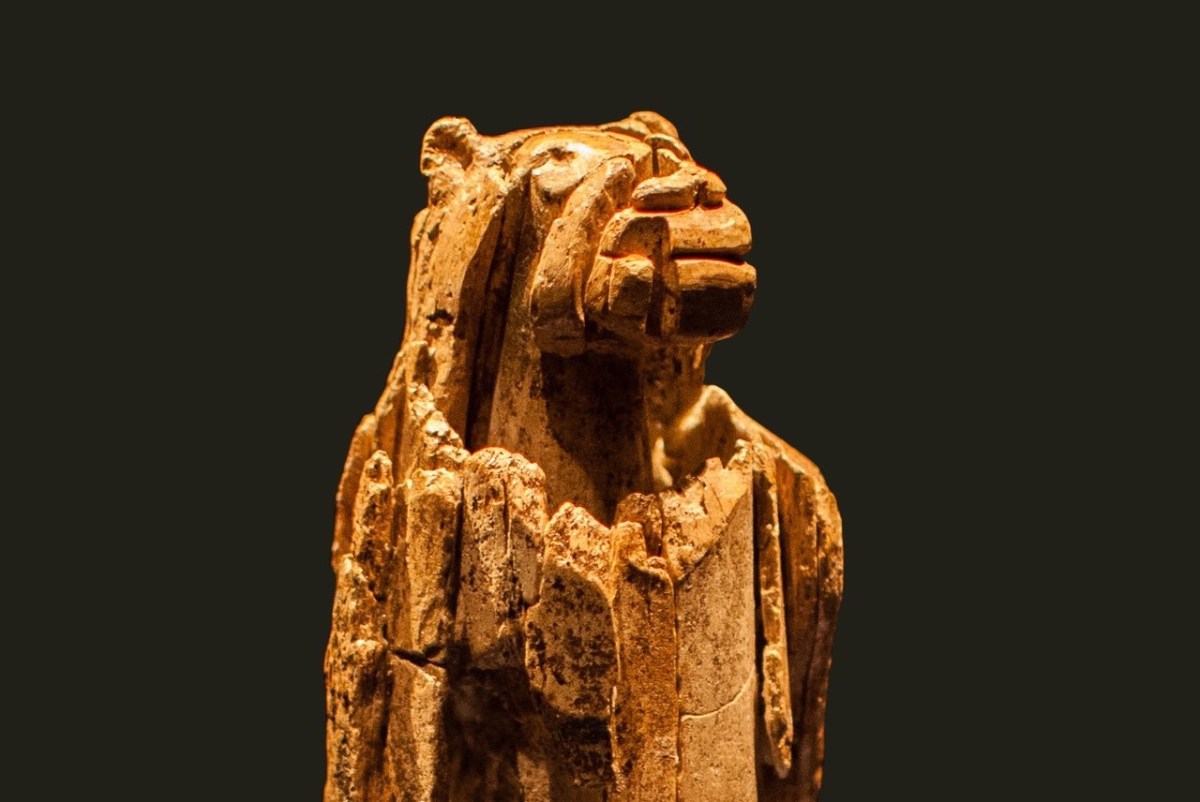
The Lion-human of Hohlenstein-Stadel

The Lion-Person (its intended gender is the subject of debate) is “the oldest known physical representation of a supernatural being,” a 30cm figurine dating back approximately 40,000 years. Carved from a mammoth tusk, scientists estimate it would have taken a skilled person around 400 hours to create with the tools of the era.

That long of a process implies that the culture that produced it made room for artists or craftspeople, excusing them from at least some of the more survival-oriented duties of the tribe to create objects of beauty and imagination. As the British Museum’s Jill Cook puts it (quoted in Wikipedia), the object points to “… a relationship to things unseen, to the vital forces of nature, that you need to perhaps propitiate, perhaps connect to, in order to ensure your successful life.”

As incredible as the artifact itself is, I was also surprised to learn that is in a museum in Ulm, a relatively small German city on the border of Bavaria. I would just assume that something like this would be in one of the world’s largest or best resourced museums. It just goes to show what wonders you can stumble across in unexpected places.

(Found through a reference in Gaia Vince’s book Transcendence, which is packed with so many fascinating asides that I’ve had to stop bugging my partner with them and start sharing them here.)

What I Read in January 2022

Non-fiction

New Dark Age: Technology and the End of the Future (James Bridle, 2018)

Read in preparation for Bridle’s upcoming Ways of Being, which sounds like a more optimistic expansions of New Dark Age’s themes. Not that I think Bridle was wrong to be concerned about the consequences of our current technological direction, and New Dark Age makes an excellent case that the desire to conflate the real with the computable is causing more harm than good. Well-chosen examples make for an enjoyable read, but Bridle’s critiques have permeated the culture over the last few years. Diagnosing the problem is important, but dark as things get, the future never truly ends, and I’m looking forward to something with a little more hope.

The Dawn of Everything: A New History of Humanity (David Graeber & David Wengrow, 2021)

If there’s one key arguments I took from this—and given its massive scope, it’s probably foolish to reduce it to a single message—but if there is, it’s that society and humanity are much more malleable than we usually think. The Davids take it as their task to complicate our notion of pre-history. Instead of a straightforward progression from utopian foraging cultures to hierarchical farming states, they point out that there’s been an incredible variety in how societies organize. Some societies even change their models seasonally, choosing different structures, hierarchies, and even identities throughout the year.

Given all that variety, the question is: how did we get so stuck in one model of society, and how do we start imagining a way forward? I’ve seen grumblings that Dawn of Everything’s history isn’t as radical as it presents itself, and that it isn’t as accurate as it should be, but taken as a prompt for imagining better futures, it’s still well worth a read.

My View of the World (Erwin Schrödinger, 1951)

Maria Popova’s Marginalian blog prompted this one, and while her summary does a fantastic job capturing both the meaning and the spirit of Schrödinger’s essays, I’m still glad to have read its entirety. Popular memory of cultural figures tends to reduce them to a single idea, and for Schrödinger it’s the one thought experiment; if it wasn’t for Popova’s post I would never have guessed he was writing on notions of panpsychism or universal consciousness while he was also helping redefine our understand of the nature of reality. His writing is wonderfully poetic in places (“What is it that has called you so suddenly out of nothingness to enjoy for a brief while a spectacle which remains quite indifferent to you?”), a touch overly technical in others, but I guess that’s to be expected for someone with such wide-roaming thoughts.

Fiction

The Taiga Syndrome (Cristina Rivera Garza, 2018)

Referenced in Jack Young’s phenomenal essay, Making sense of our multispecies world: Body-Forest as community, Garza’s book is something like a detective story, a poem, a fairy tale, and a collection of cryptic koans. Difficult to pin down, in other words, but fortunately it’s short enough to be read in one sitting, which makes it more inviting for future re-reading. Given how obliquely it approaches its subjects, it strikes me as one that will reward time spent percolating in the unconscious, too.
Podcast: The AM, Feb. 28, 2022

This week’s episode of The AM (also streaming at CJSW.com): Take a deep breath and submerge yourself in the oblique sounds of The AM, a three-hour respite from a chaotic world. This week is bookended by new music from Bitchin’ Bajas and Orange Crate Art, finding room for vintage soul, modern pop experiments, jangling guitars, desert psych, and other offbeat albums old and new.

Continue reading

Pneumatic Tubes – A Letter From TreeTops

A project from Mercury Rev and Midlake multi-instrumentalist Jesse Chandler, A Letter from TreeTops was written in the aftermath of his father’s death, its foundations laid in only a few days of solo recording in his family home. Knowing that, you can certainly pick up an undercurrent of melancholy in TreeTops’ meandering melodies, but it isn’t the dominant emotion by any stretch.

Take “Mumbly-Peg”, with its bubbling synths and gentle clarinet, a riverside walk propelled by quietly insistent drums; or the playful buzz of “Saw Teeth” and its overlapping melodies clamboring over one another. Both are album highlights, and both seem rooted in sun-dappled nostalgia. “Magic Meadow,” one of the few tunes to feature prominent guitar (and what sounds like maybe a singing saw?) perfectly captures the feeling of emerging from a dense wood into an open expanse; it’s a song to bask in.

With a variety that belies its rushed creation, A Letter from TreeTops is a gorgeous addition to the Ghost Box catalogue, a collection of richly textured, contemplative instrumentals.

Podcast: The AM, Feb. 21, 2022

This week’s episode of The AM (also streaming at CJSW.com): The holiday Monday made for a groggier-than-usual episode, but fortunately the music holds up even if the hosting is slightly off. After all, it’s hard to go wrong with new tunes from Cate Le Bon, Animal Collective, Exek, Ombiigizi, Congotronics International, Reptalians, and the list goes on…

Continue reading

“A Story of America in Three Scams”

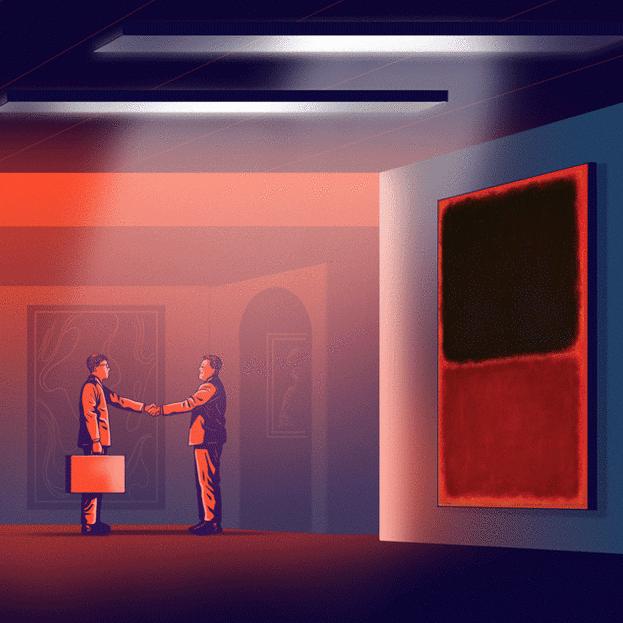
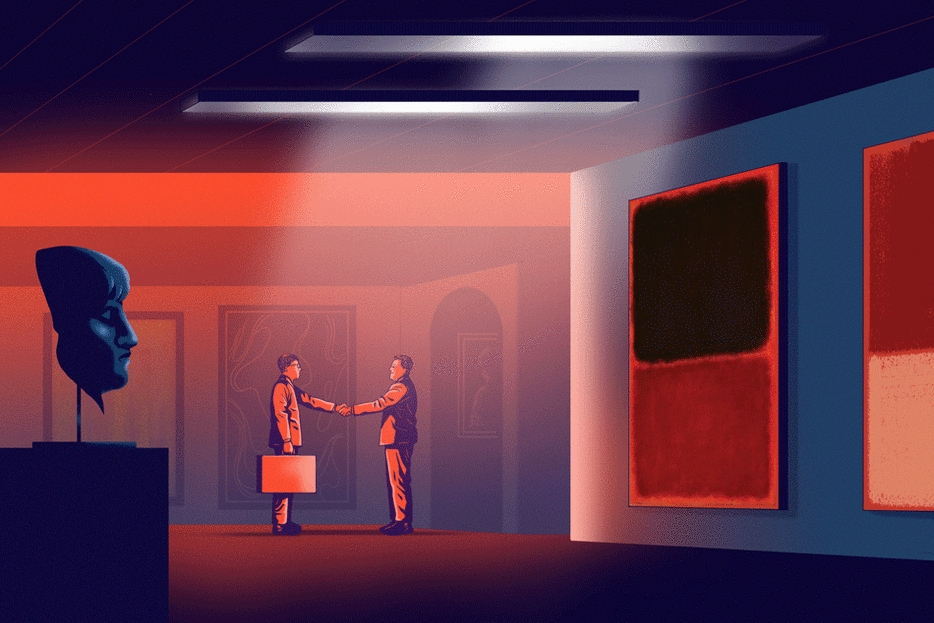
A blend of a whodunnit, art appreciation, and political analysis, Richard Warnica’s Hazlitt piece Rothko at the Inauguration traces the history and repercussions of one of New York’s biggest art scandals, its connection to Donald Trump’s inauguration, and the lasting impact of the battle over Rothko’s legacy.

As much as I appreciated the art scene intrigue, it’s Warnica’s own obsession with Rothko that really stuck with me. Describing the impact of those paintings is no easy task. Seeing a photo doesn’t do them justice; there’s an emotional power to them that only really comes with seeing them in person, a combination of their scale and some mysterious aspect of their technique. You can feel that struggle in the way Warnica talks about the paintings, a mix of straightforward description and pure emotion:

“There were purples and greens, blues, oranges, tans: all of them arranged in stacked blocks of colour with those tide pool edges—the spaces in-between where everything combines. I don’t know how long I sat there. I know I cried, although even now I’d have trouble breaking down the exact alchemy of why.”

“Rothko at the Inauguration” is about institutional rot and the corrupting influence of “easy” money, along with the way the financialization of fine art has played into those stories. Where some writers approach that subject with academic detachment, Warnica never forgets how art gained that power in the first place. Before it became just one more financial vehicle, a faceless asset in a tax-sheltered storage facility, it was a gateway to transcendence.

Steve Gunn – Protection (ft. Mdou Moctar) (Matador)

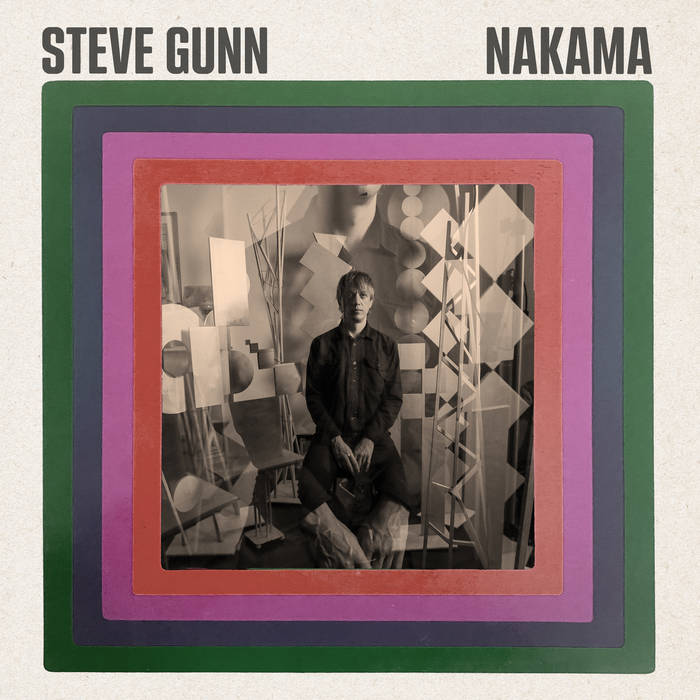
The opener to Nakama, a collection of collaborative reworkings of songs from Gunn’s 2021 release, Other You, “Protection” swaps out the laid-back motorik of the original for an even more stripped back arrangement. Percussive guitar and hand-claps give the song a quiet momentum, a gentle current for Gunn’s melody to drift on. Tuareg guitar hero Mdou Moctar is known for his scorching solos, but his contributions are more restrained here, approaching the tune like a sister-song to his recent album closer “Bismilahi Atagah.” It’s all sunshine and warmth, four and a half minutes of shelter from the world outside.

You can preview “Protection” on Gunn’s Bandcamp, or stream the full Nakama EP, with contributions from Circuit des Yeux, Bing & Ruth, and Natural Information Society over on Spotify.